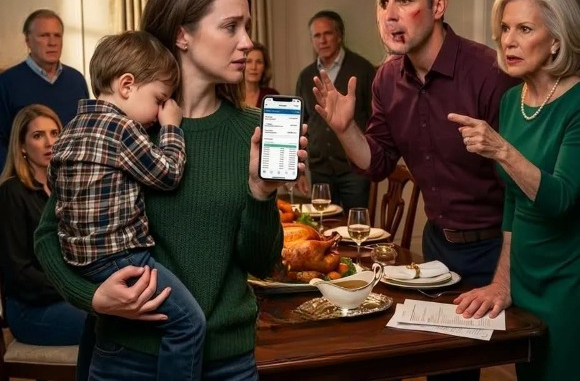
The moment my husband demanded that I apologize for standing up for our son, I knew our marriage had crossed a line it couldn’t come back from. For years, his family had criticized me in subtle and not-so-subtle ways, and I had stayed silent just to avoid conflict. But during a holiday dinner, everything shifted when my sister-in-law implied that our young son would be better off raised by someone else. Around the same time, I had discovered financial documents suggesting that money intended for my son’s future had been moved without my knowledge. When I calmly brought those records to the table, instead of support or concern, my husband reacted by telling me I had embarrassed his family and needed to apologize. Then he gave me a choice: say sorry or leave. Looking at my son’s frightened expression, I made my decision without arguing further. That night, I began planning a future where peace mattered more than approval.
Before dawn, I packed only what was essential—my son’s clothing, his favorite toy, our passports, key documents, and the records that proved what I had found. I left behind the expensive gifts, sentimental items, and even my wedding ring, placing it with a short note reminding my husband that I had done exactly what he asked. My decision to leave wasn’t impulsive. I was originally from New Zealand, my mother still lived there, my son had dual citizenship, and I already had a nursing job waiting for me. My husband had previously signed travel paperwork for a trip that never took place, and those documents were still valid. After a long journey, my mother welcomed us warmly, and for the first time in years, I saw my son relaxed and genuinely happy, without tension hanging over him. In that moment, I finally felt like I could breathe again.
Peace didn’t stop the backlash. Messages, calls, and accusations came quickly in the days that followed. Instead of reacting emotionally, I reached out to lawyers in both countries and shared every document and piece of evidence I had. Their guidance reassured me that everything I had done was lawful and justified. I then sent a carefully worded email to my husband, with both legal teams copied, explaining that our son was safe, that communication would now go through attorneys, and that the money taken from his education fund needed to be returned. After a short silence, my husband replied with only “Call me.” I declined and agreed instead to a formal, recorded meeting with both legal representatives present.
During that meeting, everything was laid out clearly—travel consent forms, citizenship documents, financial records, and the messages that led to my departure. With all the evidence in front of them, there was no room left to deny what had happened. The funds were eventually returned, and structured boundaries were put in place for future contact. Over time, my husband accepted responsibility for his actions and began working toward being a more reliable parent. We later finalized our divorce and created a custody arrangement centered entirely on our son’s well-being. Looking back, I don’t see my decision as an escape, but as a necessary step. The real lesson wasn’t about conflict or victory—it was realizing that protecting your child, your peace, and your future can require the hardest but most important choice of all.
Leave a Reply