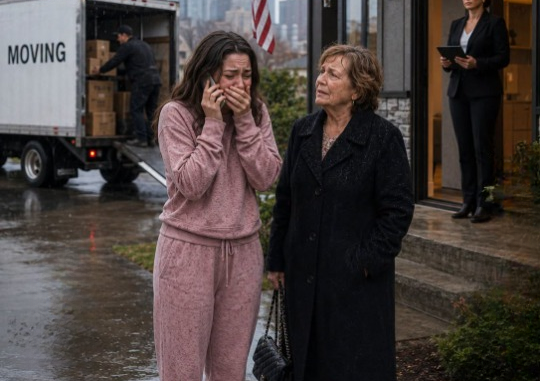
“Open the gate, Jasmine.” My sister’s voice came through the security intercom as she stood outside my waterfront mansion overlooking Puget Sound. Standing beside her was our mother, and parked behind them was a fully loaded moving truck, as if they had already decided they belonged in the home I had spent years working to build. They hadn’t called, apologized, or spoken to me in thirteen years. The last time we shared a home, my sister had secretly stolen my identity and accumulated $15,000 in credit card debt under my name. The betrayal forced me to put my graduate school dreams on hold while I worked extra hours to pay off every cent. Yet now they stood at my gate expecting me to erase the past and welcome them in without hesitation.
Instead of opening the gate, I calmly asked why they had come. My sister confidently replied that they were moving in because they had nowhere else to stay. When I told her that wasn’t happening, she immediately started a livestream, telling people online that I had abandoned my family after becoming successful. Within minutes, my phone was flooded with messages from relatives and strangers accusing me of being heartless and demanding that I let them inside. I ignored the criticism and made one quiet call to my lawyer. Not long afterward, legal documents appeared on both my mother’s and sister’s phones—and their attitudes changed completely.
Several months earlier, my attorney had discovered that the situation was much more serious than a surprise family visit. My sister had used an outdated power of attorney document to take out loans connected to one of my investment properties without my permission. Although I had already secured my finances, repaired the damage to my credit, and stopped the property from going into foreclosure, the consequences had been significant. The evidence included records involving my estate, insurance information, and business accounts, all carefully preserved in case legal action became necessary.
As they stood outside my gate, my mother finally understood what had really happened. My sister admitted that she thought she would be able to fix everything before I found out, but the damage to our relationship had already been done. Instead of simply turning them away, I handed them a legally binding repayment agreement created by my attorney, giving them one final chance to take responsibility for their actions.
I still refused to let them move into my house, but I agreed to help them find a place to live and pay the initial deposit as part of the repayment arrangement—not as a handout. For the first time in years, my mother apologized and admitted she should have protected me instead of allowing me to carry the weight of everyone else’s mistakes.
The apology didn’t erase thirteen years of distance, but it created an opportunity for an honest conversation. As I watched their moving truck leave my driveway, I realized that finding peace doesn’t always mean completely removing people from your life. Sometimes it means setting firm boundaries while leaving room for someone to prove they can rebuild the trust they once destroyed.
Leave a Reply