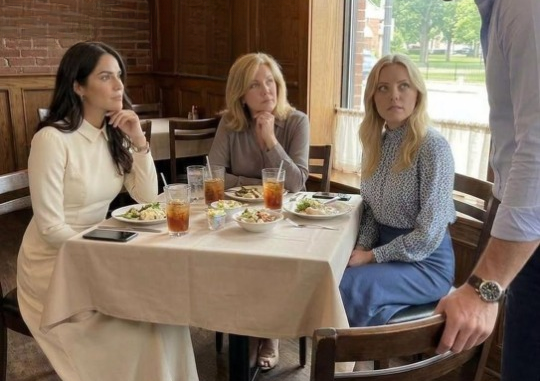
The restaurant grew quiet when Adrian told me I had no right to call him my “future husband.” I had simply mentioned to the waiter that my future husband wasn’t a fan of olives, but Adrian immediately corrected me in front of his mother and sister.
“We’re engaged, Mara. We’re not married yet,” he said with a confident smile that looked more suited for a business interview than a conversation with the woman wearing his engagement ring.
His mother, Vivienne, gently suggested that I should give him some space, while his sister Camille laughed and joked that Adrian was already “marrying above his level.”
I glanced down at the ring on my finger, then looked at the man whose company I had helped save, and something inside me finally became clear.
The future I thought we were building together meant something very different to him.
I didn’t argue.
I didn’t cause a scene.
I simply smiled and said, “I understand.”
That night, while Adrian slept peacefully in my penthouse, I opened our wedding plans and began removing every piece that belonged to me.
From the outside, Adrian Vale and I looked like the perfect couple. We were successful, admired, and preparing for a glamorous September wedding that everyone expected to be unforgettable.
But behind the scenes, I had been carrying most of the burden.
I had personally covered nearly $186,000 in wedding-related expenses, including the venue, hotels, catering, transportation, security, and floral arrangements. Adrian wanted a celebration that would impress his investors and strengthen his public image.
I had also introduced him to my father’s private investment firm, which approved a $2.4 million bridge loan when Vale Strategic Holdings was struggling to meet payroll.
Whenever cameras were around, Adrian called me his greatest partner.
Behind closed doors, he acted as though everything I did was simply expected.
My father, Thomas Bennett, had warned me years earlier that people often reveal their true intentions once they believe they have secured everything they want.
I had defended Adrian for a long time, telling myself his confidence came from success and pressure.
But after that dinner, I stopped making excuses.
By morning, I had canceled the hotel arrangements for his relatives, removed his business contacts from the guest list, ended the luxury transportation agreements, and instructed the wedding coordinator to keep only the plans and expenses that were connected to my name.
Two days later, Adrian organized an exclusive lunch with his family and several business associates. He planned to announce the final wedding details and celebrate what he believed was another achievement.
Instead, every guest found a folder waiting at their seat.
The label read:
Updated Wedding Plan.
Adrian opened his folder with a smile, assuming I had once again handled everything for him.
That expression disappeared quickly.
Inside, he found that his relatives’ accommodations were canceled, his guest list had been changed, and the expensive events designed around his image had been removed.
I calmly explained that he had made it clear we were not yet truly connected, so I had stopped investing in a wedding that seemed designed more for his reputation than our relationship.
He accused me of overreacting to one comment.
I told him it was never about one sentence.
That sentence simply revealed years of behavior I had ignored.
Then he reached the final pages.
His expression changed completely.
There were records of unexplained company transfers involving Vivienne’s foundation and Camille’s consulting business.
For the first time, Adrian looked genuinely nervous.
I picked up my purse and walked away, leaving him with one question:
How much had I already uncovered?
The answer became much bigger than a canceled wedding.
My legal team discovered that parts of my original investment had been redirected toward businesses controlled by Adrian’s family members. Some contracts carrying my approval had also been changed after I signed them.
Even more disturbing, Adrian had prepared a proposed marriage agreement months before our engagement that would have given him access to my family’s connections while limiting my rights to anything created through those opportunities.
His company also carried major financial risks, including loans, insurance obligations, and property debts based on valuations that did not match reality.
Records showed Adrian had discussed transferring certain shares into his mother’s future estate to keep them protected from potential claims.
When confronted, he argued that helping his family was not wrong and accused me of confusing emotional hurt with business disagreements.
My attorney saw things differently.
The evidence was enough to begin arbitration proceedings and prepare for further legal action if necessary.
Once investors reviewed the documents, they demanded an independent audit, paused additional funding, and removed Adrian from decision-making authority while the situation was investigated.
After everything came apart, Adrian’s attitude changed.
First, he was angry.
Then he apologized.
Eventually, he begged for another chance.
He asked whether one mistake should destroy everything we had created together.
I told him the wedding was never the real problem.
The problem was that he viewed my support as something he was entitled to, rather than something I freely chose to give.
I ended the engagement, recovered the money protected by my agreements, and used the remaining wedding funds to create a mentorship program for women building their own businesses.
Months later, Adrian admitted that he had believed I would always stay because of everything we had invested together.
But leaving was the decision that protected my future.
The moment he rejected being called my “future husband,” he unknowingly reminded me that my future belonged to me.
Leave a Reply