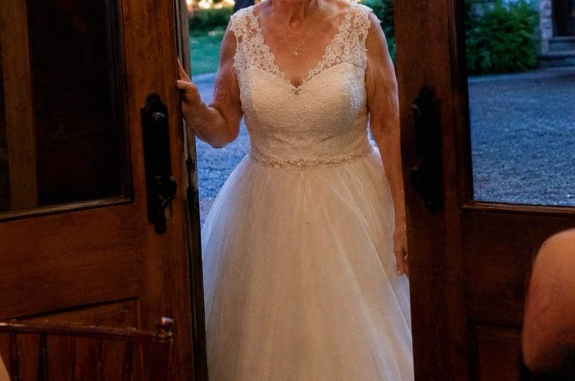
Margaret immediately knows the elegantly wrapped package on her doorstep is from her future daughter-in-law, Anita. Inside is a beautiful white maxi dress and a note asking her to wear it to the wedding. Given their difficult relationship, Margaret is convinced it’s a setup. She and Anita have disagreed over family values for years, and Margaret has been hurt by being excluded from nearly every wedding decision.
Unable to shake her suspicions, Margaret confides in her best friend, who encourages her to speak with Anita before jumping to conclusions. They meet at a café, where Margaret questions why she would be asked to wear white to someone else’s wedding. Anita calmly explains that the dress is meant to honor Margaret and symbolize the joining of their families. Though still uncertain, Margaret decides to trust her.
On the wedding day, Margaret nervously puts on the white dress, convinced the guests will criticize her. Her anxiety grows throughout the drive to the venue, and she braces herself for embarrassment as she walks inside.
Instead, she is greeted by a vibrant celebration filled with colorful decorations inspired by Indian traditions. The bride is not wearing white at all but a stunning red sari. Confused but relieved, Margaret is approached by Anita’s father, who warmly thanks her for honoring their customs by wearing white. He explains that, in their tradition, white represents purity and new beginnings. Margaret realizes Anita had never intended to embarrass her—instead, she had given her a place of honor.
As the reception continues, Margaret approaches Anita to apologize for doubting her intentions. She admits that fear and past misunderstandings had clouded her judgment. Anita accepts the apology, and the two agree to leave the past behind and build a better relationship for the sake of their family. By the end of the evening, Margaret no longer sees Anita as the woman taking her son away but as the daughter she is gaining.
Later, Anita reflects on the wedding and her relationship with Margaret. She remembers how their differences and constant disagreements made wedding planning stressful, leading her to keep Margaret at a distance. Although she regretted excluding her, she hoped the white dress would serve as an olive branch and show that Margaret held an important place in the family.
Looking through the wedding photos, Anita sees the moment Margaret arrived wearing the dress and remembers how meaningful it became. What began as a simple gift turned into a symbol of acceptance, reconciliation, and the beginning of a genuine bond. The wedding celebrated not only the marriage between Anita and James but also the coming together of two families with a renewed sense of understanding.
Leave a Reply