When Ria called me into her office six years ago, I already had a feeling about what was coming. She avoided my gaze as she said the company was “changing direction,” and within minutes I discovered her niece would be taking my position. I walked out carrying a small box of belongings and a weight I couldn’t quite describe. For weeks, I doubted myself and replayed everything I had done wrong. But eventually, I realized staying bitter would only hold me back. I started taking online business courses at night, worked temporary jobs during the day, and slowly rebuilt both my skills and my confidence. What felt like the end of my career turned into the beginning of something entirely new.
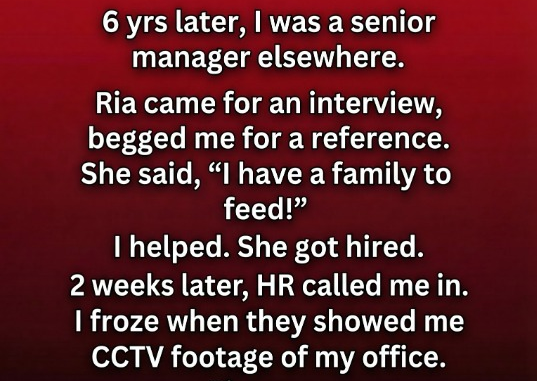
Over the years, I worked harder than I ever had before. I joined a growing company where my contributions were valued, and through steady effort, I rose into management. By the time I became a senior manager, I understood something clearly: leadership is not about authority, but about how people feel after working with you. Then, one afternoon, HR told me a candidate named Ria Lawson had come in for an interview. When she entered the room, she froze after seeing me. The confidence she once had was gone. Afterward, she quietly asked if I could speak positively about her to HR, admitting she was struggling financially and needed another opportunity to support her family.
Part of me remembered the humiliation I felt years ago, but another part remembered how it feels to be defined by a single setback. I agreed to help. I told HR she had strong experience and solid organizational skills despite our shared history, and she was hired shortly after. I felt I had done the right thing—until HR called me into a private meeting the next morning. They showed me security footage from the night before, where someone had entered my office after hours and accessed confidential files on my computer. My stomach dropped when I recognized Ria.
The investigation confirmed she had copied sensitive information, hoping to use it to secure a better-paying job elsewhere. She later admitted she acted out of fear and desperation, worried about losing stability again. HR handled it formally, and she was dismissed. Before leaving, she asked to speak with me one last time and apologized, saying she regretted betraying the only person who had given her another chance. Watching her go, I understood something important: forgiveness doesn’t always change outcomes, but it does define who we choose to become. In the end, success isn’t measured by revenge or position, but by holding onto integrity even when it would be easier not to.
Leave a Reply