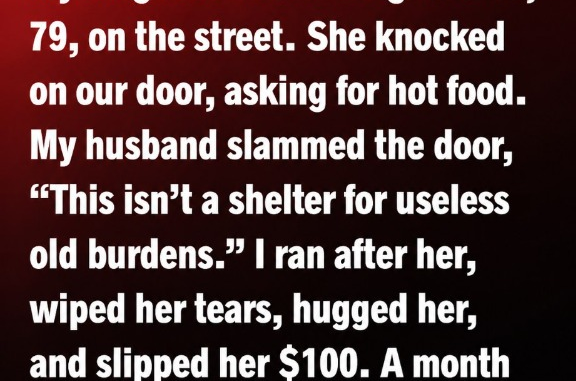
Rosa showed up on our street one stormy evening, the cold rain soaking her sandals as she clutched two worn grocery bags. She stood outside her grandson Daniel’s house while he shouted from the doorway, refusing to let her in. Everyone on the street could hear their argument, yet no one stepped forward. When she finally turned away in silence, she walked slowly toward our home and knocked gently on the door.
My husband opened it first. He barely glanced at her before saying our house wasn’t a place for “other people’s problems,” then closed the door. I stood still for a moment, then ran after her. Rosa was near the gate, shaking from the cold and holding back tears. I wrapped my sweater around her, gave her the small amount of cash I had, and listened as she explained that her grandson thought she had become too much of a burden.
That night, my husband and I argued more than we had in years. He insisted it wasn’t our responsibility and said every family should handle its own issues. What unsettled me most wasn’t just his refusal to help, but how easily he admitted he would do the same to his own mother if it came to that. I couldn’t stop thinking about Rosa afterward—where she slept, whether she had eaten, and how someone so fragile could be treated as if she no longer mattered. Life on the street soon went back to normal, but something inside me had shifted. I began noticing how quickly people looked away when helping required even the smallest inconvenience.
About a month later, I opened the newspaper and froze at Rosa’s photo on the front page. The article revealed she had spent over forty years working as a nurse in public hospitals, caring for patients who often had no one else. One of her former patients, now a successful businessman, had recognized her at a shelter and offered her a place to stay. As her story spread, people across the city were moved by her lifelong compassion. Neighbors and organizations stepped in to support her, while Daniel faced harsh criticism for abandoning the woman who had once devoted her life to helping others.
When my husband read the article, his reaction surprised me. He didn’t look remorseful for how he had treated Rosa—only uneasy about the possibility that others might find out. In that moment, I realized something important: a person’s character isn’t revealed in comfortable situations, but in the quiet decisions they make when no one is watching. Since then, I’ve stopped measuring people by appearances or polite words, and started paying attention to how they treat those who have nothing to offer in return.
Leave a Reply