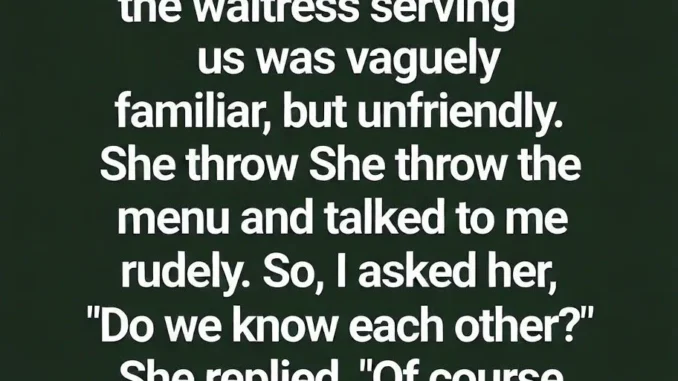
I walked into the café expecting nothing more than an ordinary lunch, but I walked out with a powerful lesson about accountability, empathy, and the lasting impact of our actions. When our waitress, Sandra, reacted angrily toward me, I slowly realized that I was the “villain” in a chapter of her life I had completely forgotten. Back in eleventh grade, I had laughed during her drama audition without realizing how deeply that moment would hurt her. For years afterward, that humiliation followed her, damaging her confidence and causing her to give up on the dreams she once had.
Confronting our past mistakes is never easy, but accepting responsibility is an important part of growing as a person. Sandra had carried the pain of that experience for years, eventually abandoning her passion for acting and settling into a life filled with quiet resentment.
“You laughed instead of seeing me,” she told me during our conversation.
Those words stayed with me.
The Power of Showing Up: Turning Regret Into Support
Saying “I’m sorry” was only the beginning.
A genuine apology means more when it’s followed by action. Instead of simply apologizing and walking away, I decided to support the dream I had once unknowingly helped destroy. We began working together through career guidance, encouragement, and the long process of rebuilding her confidence.
When Sandra finally stepped onto an open-mic stage and performed a dramatic monologue, it represented much more than a simple performance.
It was a breakthrough.
Watching her regain the confidence she had lost years earlier meant more to me than any achievement in my own design career. Her journey reminded me that we all have the ability to stop being an obstacle in someone else’s path and become part of their recovery instead.
The “Second Act”: Turning Pain Into Purpose
Sandra’s story didn’t end behind the café counter.
Eventually, she earned a role in a major streaming production. But her greatest achievement came afterward, when she created a workshop called “Second Act.”
The program helps adults reconnect with education and the performing arts, especially people who abandoned their dreams because of bullying, humiliation, or social anxiety.
Sandra went from being a “waitress with a past” to becoming a community leader and advocate for people seeking a second chance.
Her story proves that your past doesn’t have to determine your future.
In a poem about forgiveness that later went viral, she captured the lesson perfectly: sometimes we have the opportunity to become the turning point in someone else’s life—if we’re brave enough to show up.
A Lesson for Every Generation
Everyone has something in their past they wish they could change.
But this story shows that redemption begins when we take responsibility for what we’ve done. Sometimes making amends requires more than words. It can mean offering support, opening a door, making a connection, or simply being there when someone needs encouragement.
Kindness can stay with people for years.
So can cruelty.
When life gives you an opportunity to repair something you once broke, don’t ignore it. Take that second chance—not because it erases what happened, but because it gives the future a chance to be different.
Sometimes the smallest act of accountability can become the beginning of someone else’s second act.
Leave a Reply