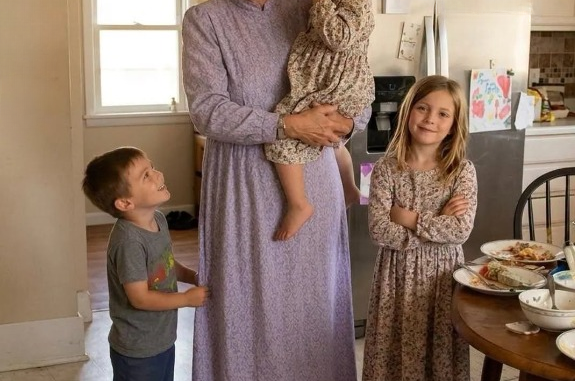
I stopped by my mother’s house expecting a relaxing evening with takeout and a movie, but what I found instead immediately filled me with concern. The kitchen was in complete disarray, three energetic children were racing through the house, and my 68-year-old mother looked utterly drained. My husband’s sister, Rachel, lived just a few minutes away, which had always seemed ideal for family get-togethers and the occasional emergency. She often referred to my mom as her “second mother,” but I had no idea how heavily she had come to rely on her. Rachel had three children—Noah, 7, Emma, 5, and Caleb, 2—and somewhere along the way, my retired mother had quietly become their unpaid, full-time caregiver without ever agreeing to it. Watching Mom rub her aching back while trying to prepare dinner made it clear that something had to change.
Once the children settled down, I asked my mother how long this had been going on. She admitted Rachel frequently dropped the kids off with promises of being gone for only an hour, only to stay away for most of the day. Sometimes it happened four days a week. Rachel rarely asked whether Mom had plans, never checked if she was feeling well, and seemed to believe retirement meant endless free time. When Rachel finally returned that evening carrying shopping bags, she acted as though everything was perfectly normal. Then she glanced at my exhausted mother and casually said, “She’s home all day anyway.” That single remark made me realize Rachel no longer viewed my mother as family—she saw her as free childcare she could count on whenever it suited her.
The following day, I decided Rachel needed to understand how unfair the situation had become. I invited her to a family dinner and asked several relatives to be there. My goal wasn’t to embarrass her but to help her see things from another perspective. During the meal, we filled a large calendar with imaginary responsibilities everyone could simply assign to Rachel without asking—running errands, attending appointments, babysitting, and handling family chores. She immediately protested, saying she couldn’t possibly spend every weekend taking care of everyone else’s responsibilities. That reaction made the point for us. Later, an attorney explained that the issue wasn’t a legal matter but one of healthy boundaries and mutual respect. We also talked about practical concerns, including childcare alternatives, household costs, insurance, retirement planning, estate matters, and why my mother’s time deserved the same respect as anyone else’s.
Over the next several weeks, Rachel’s behavior gradually began to change. Instead of dropping by unannounced, she started calling ahead and asking whether Mom was available. She enrolled the children in an after-school program on certain days and worked out a more balanced routine with her husband. My mother still enjoyed spending time with her grandchildren, but now it happened on her own terms rather than out of obligation. She no longer kept her phone close, waiting for another last-minute request. Months later, Rachel admitted she had mistaken generosity for unlimited availability and realized she had taken advantage of someone who simply loved her family. At our next family dinner, she served my mother first, smiled, and asked, “Would you like anything else?” It was a simple gesture, but it reflected something much more meaningful—she finally saw my mother as a person, not just someone she could always rely on.
Leave a Reply