At 2:07 one morning, Mara woke up and noticed Ethan’s side of the bed was empty once again. Their three-week-old son, Noah, was sleeping peacefully beside her, but the quiet hallway immediately made her uneasy. She opened the baby-monitor app and checked the recordings.
What she saw left her confused.
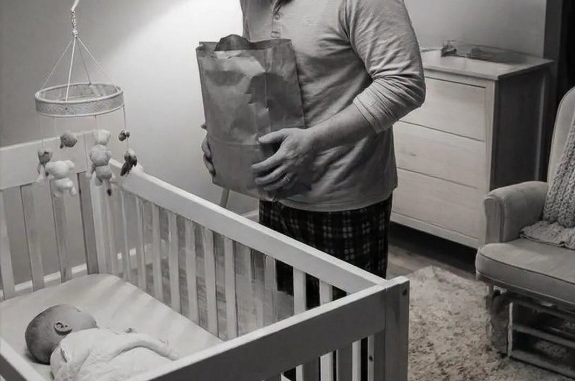
Ethan walked into the nursery carrying a brown paper bag, looked over the crib, and sat silently on the floor beneath the rocking chair. He pulled out candy, fast-food packaging, two tiny liquor bottles, and a black journal.
Then he started writing with his head lowered.
It was the same secret routine she had noticed in nearly every recording over the past month.
By morning, exhaustion had turned Mara’s concern into suspicion. Ethan had been doing everything a new father could do—working, cleaning bottles, folding laundry, helping with nighttime feedings—but he had never once mentioned these late-night trips to the nursery.
When she watched more videos, she noticed something strange.
He barely drank from the bottles.
He ate the food as if he was forcing himself to stay awake.
In one recording, she saw his shoulders trembling as he covered his face with his hand.
Later that day, Mara found the black notebook hidden beneath a pile of baby clothes.
Terrified of what she might discover, she wondered if Ethan had started regretting their marriage, their baby, or the life they had built together.
But when she opened the journal, the first sentence changed everything.
Every page was written for Noah.
Ethan confessed his deepest fears—the fear of failing as a father, losing his job, falling behind on the mortgage, or making one mistake that could hurt the family he loved.
He wrote about Mara’s postpartum struggles with compassion, reminding their son that his mother was strong even on the days she felt completely broken.
He admitted the late-night snacks and tiny bottles weren’t moments of enjoyment.
They were his attempt to calm overwhelming anxiety he didn’t know how to express.
He wrote that a lawyer, insurance plan, savings account, or investment portfolio could protect a family’s future—but none of those things mattered if a family couldn’t be honest about their pain.
When Ethan returned home from his walk and found Mara holding the notebook, she expected anger or embarrassment.
Instead, she hugged him.
There was no dramatic fight.
No accusations.
Just two exhausted parents finally admitting they were struggling and that they both needed support.
The next morning, Mara contacted her doctor, and Ethan reached out to a counselor who worked with new fathers experiencing anxiety.
Mara began treatment, while Ethan stopped hiding his fears behind midnight food runs and alcohol.
Over time, things slowly improved.
Noah started sleeping better.
Mara’s hardest days became easier to manage.
And Ethan learned that he didn’t have to face panic alone—he could wake her and ask for help.
He continued writing in the notebook, but the words slowly changed.
The fear faded.
Hope replaced it.
Months later, Mara opened the journal and found one new sentence:
“This is the night your mother and I finally started saving each other.”
She cried.
Not because their marriage had been flawless.
But because they had finally become honest enough to make it through.
Leave a Reply