I delivered a pizza to an elderly woman, and the moment I stepped into her cold, dim house, I knew something was wrong. I made a choice, thinking it would help—but I never expected her to look straight at me minutes later and say, “This is your fault.”
That March night felt bitterly cold. Standing on her back steps, I already sensed this delivery was off. The house was dark, the yard overgrown. I balanced a large pepperoni pizza in one hand while double-checking the address on my phone. It matched, along with a note: “Please knock loud.”
“This better not be a prank,” I muttered as I knocked.
“Come in,” a voice called.
Every instinct told me to walk away, but I was behind schedule, and the voice didn’t sound threatening. So I opened the door.
Inside, it was even colder than outside. The only light came from an open fridge.
“Back here,” the voice called again.
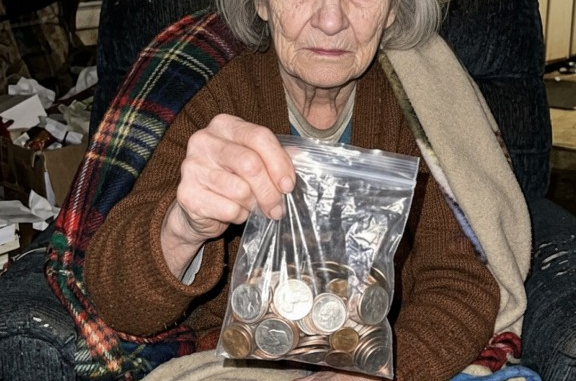
I followed it into a small living room, where an elderly woman sat in a worn recliner, wrapped in layers of blankets. A single candle flickered beside her. Her eyes immediately fixed on the pizza.
“Are you okay?” I asked. “It’s freezing in here.”
“I’m fine,” she said calmly. “I keep the heat low. Medication comes first—it’s the one thing I can’t skip.”
Then she pushed a small plastic bag toward me.
It was filled with coins—quarters, dimes, nickels, pennies—carefully collected.
“This should cover it,” she said. “I counted twice.”
I glanced at the nearly empty fridge—just water bottles and a pharmacy bag—and realized the truth. This wasn’t a treat for her. It was likely her only hot meal.
“Don’t worry about it,” I said, gently pushing the coins back. “It’s already paid for.”
“I don’t want you getting in trouble,” she said.
“I own the place,” I lied, just to spare her.
She studied me, then nodded. “Thank you, Kyle.”
As she opened the box, steam rose into her face, and she smiled with quiet relief. That moment hit harder than anything else.
I left, but couldn’t shake the feeling. Sitting in my car, staring at her dark, cold home, I knew I couldn’t just drive away.
So I texted my dispatcher an excuse for a delay and drove to the nearest police station. I told them everything and asked for a welfare check.
At the time, I thought I’d done the right thing.
But when I drove past her house later, an ambulance was outside. Neighbors gathered as paramedics helped her out.
Then she saw me.
“You,” she said, pointing. “This is your fault.”
I tried to explain, but she was furious. “I told you I was fine! They’re taking me out of my home because of you!”
The neighbors turned on me too, accusing me of overstepping.
I drove away shaken, unsure if I had helped or made things worse.
For days, her words echoed in my head.
Then, a week later, I got another delivery—to her address.
When I arrived, everything was different. The house was warm, lights on, people inside. Neighbors were unpacking groceries, setting up heaters.
She sat in her chair, no longer buried under blankets, teaching two kids how to knit.
One of the neighbors apologized. “We didn’t realize how bad it had gotten.”
She saw me and smiled.
“I owe you an apology,” she said. “I was scared. At the hospital, they told me what could’ve happened if I stayed like that.”
Her neighbors had organized help—daily visits, food, heating, even county services.
“You were the only one who saw I needed help,” she said, taking my hand.
Standing there, in that warm, lively room, I finally understood:
Doing the right thing doesn’t always feel good in the moment.
Sometimes it feels awful.
Sometimes people resent you for it.
But sometimes, the thing you interrupt… is the very thing that’s quietly harming them.
Leave a Reply