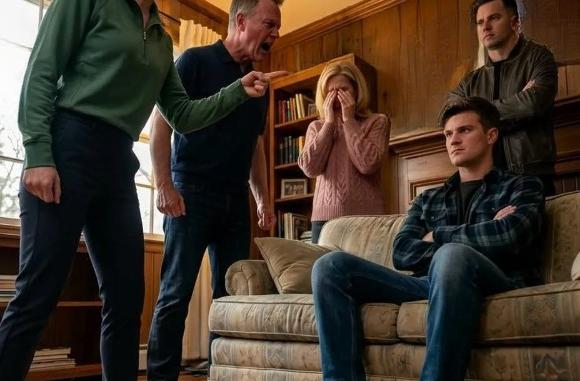
I used to think that even my family’s most unreasonable demands came from a place of care. That belief changed the day they showed up outside my house with a locksmith, expecting me to give up something I had spent years building. My younger sister, Madeline, had already received more than most—an expensive home, financial help, and countless second chances. When she lost everything through reckless choices, my parents didn’t see it as a lesson. Instead, they turned to my home as the next solution. What started as a difficult conversation quickly revealed something deeper: they didn’t see my independence as something to respect, but as something to redistribute.
When they first arrived earlier that day, they spoke calmly, suggesting it would “make sense” for my house to be transferred to my sister. They presented it as a family decision, as if my ownership and hard work were just details to negotiate. I refused—firmly, but without hostility—and asked them to leave. For a moment, I thought that was the end of it. But an hour later, they came back, this time with a locksmith, as though persistence could replace consent. Watching through my security camera, I realized this was no longer a disagreement—it was a clear attempt to cross a line I had every right to defend.
I called and told them to leave immediately. My father insisted it was still “family property,” while my mother urged me not to make things worse. My sister casually mentioned paying me back, though we all knew that wasn’t realistic. The locksmith, to his credit, refused to proceed without proper authorization. That moment of professionalism stood in stark contrast to everything else unfolding. Standing inside my own home, I felt a clarity I hadn’t experienced before. This wasn’t about family expectations anymore—it was about respect, accountability, and my right to protect what was mine.
So I made a choice I never thought I’d have to make. I called the authorities and reported it for what it was: an attempt to access my property without permission. When officers arrived, everything shifted. Facts replaced opinions, and ownership was no longer up for debate. In the days that followed, the distance between us grew—but so did my understanding of boundaries. For the first time, I stopped carrying the burden of keeping the peace at my own expense. It wasn’t easy, and it didn’t fix everything, but it marked a turning point. I realized that being part of a family doesn’t mean giving up your voice, your effort, or your sense of security. Sometimes, the most important thing you can protect isn’t just your home—it’s your sense of self.
Leave a Reply