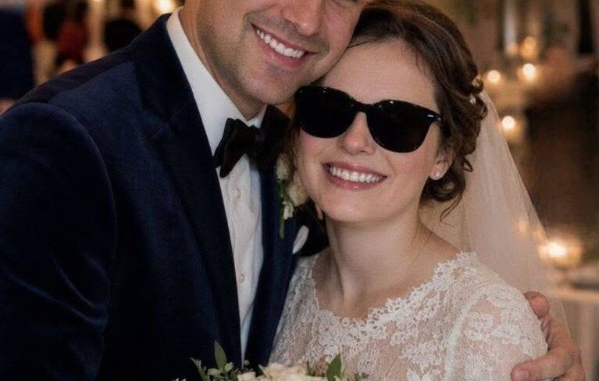
Part 1: The Letter Ed Left Behind
My brother had been gone for less than an hour when my mother was already asking about his paperwork.
Ed and Lily had been inseparable since they were children. Lily was blind, and when Ed discovered that her biological mother had abandoned her, he made a promise that never changed.
“I’m never going to leave her alone,” he told me when he was only nine years old.
And he kept that promise.
They grew up together, their friendship turned into love, and after finishing school they got married. I was genuinely happy for them, but our mother, Diane, never fully accepted Lily.
She claimed she was only being realistic, but her words were often hurtful.
“A blind wife?” she once said. “What happens when Ed can’t be there to look after her?”
Our father rarely spoke against her.
During the last year of Ed’s life, he started pulling away from the family. He stopped attending holidays, cancelled plans, and avoided questions about his health.
“It’s just a routine appointment,” he would say. “You worry too much.”
I believed him.
Then Lily called me from the hospital.
Ed had collapsed and was undergoing emergency surgery.
When I arrived, Lily was sitting alone in the waiting area, her cane resting beside her. I held her hand as we waited through ten painful hours of uncertainty.
When the doctor finally walked toward us, I knew before he spoke.
Ed was gone.
“We tried everything,” the surgeon said.
I could barely process the words. I reached for my phone to call our parents, but Lily stopped me.
“Alice, there’s something you need to know before your mother arrives.”
I told her I could not handle another shock.
But Lily shook her head.
“Ed made me promise. If something happened to him, you had to be the first person I told.”
She reached into her bag and handed me a sealed envelope.
“He wanted you to know the truth before anyone could change the story.”
Before I could open it, our parents arrived.
My mother immediately noticed the envelope.
“What is that?”
“It’s personal,” Lily answered.
“Nothing involving my son is personal from me,” Mom said.
Ed had barely been gone, yet she was already discussing his home, insurance policies, and financial accounts.
She insisted Lily could not manage everything alone.
“Whatever Ed left should stay with his actual family,” she said. “Of course, we’ll help her, but someone responsible needs to handle the important decisions.”
I looked at my father, hoping he would intervene.
He looked away.
That was when I understood.
This was not a reaction created by grief.
My mother had already thought about this.
She had been waiting for an opportunity.
Lily placed the envelope in my hands again.
“Read it before you decide what to do.”
I took her to the hospital chapel, away from my parents.
My hands trembled as I opened the envelope.
The first page was dated eighteen months earlier.
Part 2: The Reason He Kept the Secret
Inside were medical records, legal documents, property information, and a handwritten letter from Ed.
The medical records revealed something I never knew.
Eighteen months earlier, Ed had been diagnosed with a serious heart condition.
Suddenly, everything made sense.
The cancelled dinners.
The missed holidays.
The distance.
He had not been avoiding us.
He had been preparing for the possibility that he would not have much time left.
In his letter, Ed explained that after learning his condition, his doctor asked him what responsibilities mattered most before anything happened to him.
His answer was simple.
Lily.
During his final year, he quietly updated insurance policies, reorganized trusts, and changed beneficiaries. He worked with attorneys to make sure Lily could stay in their home and that no one could take control of what belonged to her.
He knew our mother would try.
One sentence stopped me completely:
“I did not choose Lily because I was dying. I chose her because I refused to let death decide what happened to her after I was gone.”
Lily sat beside me, silently crying.
I finally understood why Ed hid his illness.
He knew that if our parents found out, Mom would interfere. She would question his choices, accuse Lily of influencing him, and try to control everything before he died.
Ed had spent his final months protecting his wife from the people who were supposed to support him.
When I returned to the waiting room, I held the letter tightly.
Mom was already making calls.
“We need an attorney here immediately,” she said. “Lily cannot handle a house, let alone an entire estate.”
I told her to stop.
Then I read Ed’s letter aloud.
I explained his diagnosis, his planning, and every legal protection he created for Lily.
Mom did not apologize.
Instead, she became angry.
“She took advantage of him,” she said. “He was sick, and she manipulated him.”
I looked at her.
“Did you even know he was ill?”
She claimed they would have helped if Ed had told them.
So I asked the question she could not answer.
Did either of them notice his doctor visits?
His medications?
Any sign that something was wrong?
My father finally looked down.
“I should have paid more attention,” he admitted. “I assumed everything was fine because it was easier.”
Then he looked at Lily.
“I failed both of you.”
Mom became furious.
But I already knew the truth.
Ed had kept his illness secret because he knew exactly what would happen afterward.
And within an hour of his death, my mother had proven him right.
“You were waiting for a chance to take control of Lily’s life,” I said.
“I’m your mother,” she snapped.
“And Lily is my sister,” I answered. “Ed made that clear. If anyone fights his wishes, they will have to fight me too.”
Mom threatened legal action.
I told her I was ready.
But I would not be standing on her side.
Part 3: The Promise He Kept Until the End
Weeks later, I helped Lily organize Ed’s study.
We found his books filled with handwritten notes, unfinished repairs around the house, and birthday cards he had prepared ahead of time.
Sometimes we laughed.
Most of the time, we cried.
At the back of a drawer, we discovered a small notebook filled with ordinary reminders.
Buy groceries.
Call Alice.
Fix the porch step.
Then, hidden between those simple notes, we found one sentence:
Make sure Lily never feels alone.
There was no date.
No explanation.
Lily ran her fingers over the handwriting.
“He wrote everything down so he wouldn’t forget,” she whispered.
I shook my head.
“No. He wrote down the things he refused to fail at.”
Ed knew Lily’s deepest fear was never her blindness.
It was being abandoned.
Her biological mother left her as a child. My own mother spent years treating her like a responsibility instead of family. Ed understood that if he died without preparing, the people around him might try to erase Lily from the life they created together.
So he planned everything.
He protected the house.
He secured the accounts.
He documented his wishes.
And he trusted me to stand beside Lily when he no longer could.
Later, I found an old photograph of Ed and Lily as children. He was holding her hand while she wore a yellow dress.
I placed it among my family photographs at home.
It was more than a childhood memory.
It was proof of a promise that had lasted a lifetime.
Lily stood beside me.
“He didn’t leave me,” she said softly.
“No,” I replied. “He never left you behind.”
Then I held her hand, just as Ed had done all those years ago.
“And I won’t either.”
Leave a Reply