My Mother-in-Law Insisted Only My Son Mattered. Moments Later, a Nurse Rushed to My Daughter’s Bassinet and Revealed the Danger Everyone Else Had Missed.
The moment Nurse Sarah reached into my daughter’s bassinet, she knew something was terribly wrong.
“Call the neonatal team!” she shouted as she lifted Ivy into her arms, letting the blanket fall to the floor.
The room erupted into chaos.
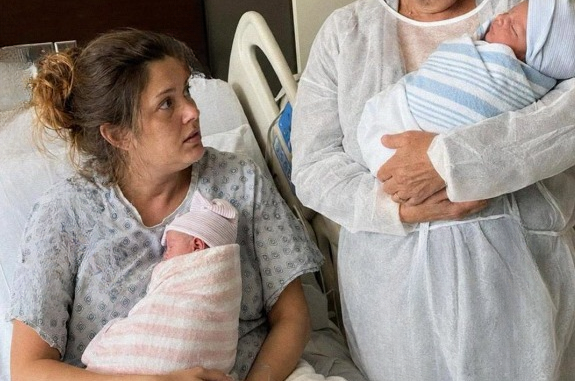
My husband, Tom, stood frozen with our newborn son, Mason, while my mother-in-law, Margot, simply stepped aside as doctors and nurses surrounded Ivy.
“What happened?” I cried.
Sarah fitted a tiny oxygen mask over my daughter’s face.
“I need oxygen now!”
Within seconds, more medical staff flooded the recovery room.
Someone pulled the curtain around Ivy’s bassinet, but I could still see her tiny feet.
They had turned blue.
I tried to get out of bed despite the pain from thirty-six hours of labor.
“What’s wrong with my baby?”
Tom started toward the medical team, but Sarah stopped him.
“Please give us space.”
“Is she breathing?”
“Not well enough.”
The doctor listened to Ivy’s chest before speaking urgently.
“Respiratory distress. Her heart rate is dropping.”
Only hours earlier, both twins had cried when they were placed on my chest.
Now I couldn’t hear my daughter at all.
Only the sound of oxygen filling the silence.
“We’re taking her to the NICU.”
Before they wheeled her away, Sarah let me touch Ivy’s tiny hand.
It was frighteningly cold.
“Stay with me,” I whispered.
We had loved that name for months.
Margot hated it.
She insisted it sounded too delicate.
After the nurses rushed Ivy away, I tried to stand, but I’d lost too much blood during delivery.
Tom caught me before I collapsed.
“Go with her,” I pleaded.
Instead of answering, Margot rested both hands possessively on Mason’s bassinet.
As though nothing else in the room mattered.
Tom noticed.
Something shifted inside him.
“Mom.”
“You should stay with the boy,” Margot replied.
“Our daughter can’t breathe.”
“The doctors are handling her.”
“Her name is Ivy.”
Margot frowned.
“This isn’t the time.”
“No,” Tom answered. “This is exactly the time.”
When she grabbed his arm and reminded him that relatives had come to meet “the boy,” he finally reached his limit.
“Leave.”
She stared at him.
“What?”
“Leave the hospital.”
She laughed softly, convinced he would change his mind.
She’d always controlled the family through money and influence.
She chose our wedding venue without asking.
She opposed Tom leaving the family business.
She constantly reminded us that the down payment on our home came from the family estate.
Every favor came with conditions.
“If I leave,” she warned, “don’t expect me to come back.”
“Then don’t.”
For the first time in years, she had nothing to say.
She picked up her purse, glanced only at Mason, ignored the empty bassinet where Ivy had been, and walked out.
Tom watched her leave before breaking down in tears.
“I never noticed.”
Neither had I.
Everyone had been celebrating Mason.
The family heir.
The future of the Waverly name.
No one realized Ivy had quietly stopped breathing.
Except Nurse Sarah.
Forty minutes later, Dr. Patel entered our room.
“Ivy is stable.”
Relief washed over us.
Then he explained the cause.
A congenital heart defect had restricted blood flow to her lungs.
She would need emergency heart surgery within twenty-four hours.
When I asked whether she would have survived much longer without treatment, he hesitated.
“If Nurse Sarah hadn’t noticed when she did… the outcome could have been very different.”
That sentence haunted me.
How long had Ivy struggled while everyone admired her brother?
Later, inside the NICU, I reached through the incubator and touched her tiny hand.
She wrapped her fingers around mine.
I burst into tears.
Tom admitted something that hurt almost as much as the diagnosis.
“I let my mother convince me this was normal.”
Margot had always favored boys.
When we announced we were expecting twins, her first question was whether one of them was a son.
During the gender reveal, she celebrated the blue confetti and barely reacted to the pink.
She claimed the family legacy was secure.
We laughed it off.
We always laughed off her cruelty.
The Waverly fortune, business, and trust had shaped everyone’s lives.
Every gift she offered carried invisible strings.
That evening she finally called.
“The girl stable yet?” she asked.
Not Ivy.
“The girl.”
Tom corrected her.
She ignored it.
Then she revealed what she truly believed.
The family trust existed to protect the heir.
Medical expenses for Ivy, she insisted, should be “carefully evaluated.”
Tom stared at the phone.
“Are you saying Mason deserves support but Ivy doesn’t?”
She calmly replied that Mason represented the family’s future.
After ending the call, Tom confessed something even worse.
A month earlier, Margot had persuaded him to sign paperwork naming Mason as the trust’s primary beneficiary.
Ivy wasn’t included.
He’d assumed it was symbolic.
I couldn’t believe it.
For years Margot had repeated that only the boy mattered.
Tom thought it was just talk.
He finally understood it wasn’t.
During Ivy’s surgery, Margot returned—with a lawyer.
She demanded Tom sign another document limiting what trust money could be spent on Ivy’s medical care.
Instead, Tom resigned from the family company.
He handed over his ownership interest in the trust.
His entire career disappeared in a single afternoon.
“My mother gave me a choice,” he said.
“The company… or Ivy.”
He chose our daughter.
Hours later, Dr. Patel emerged with a smile.
The surgery had been successful.
Our little girl survived.
When I finally held both twins together again, Mason instinctively reached for Ivy’s hand.
Tom captured the moment.
Not just Mason.
Not just Ivy.
Both of them together.
Equal.
Margot never returned to the hospital.
She later mailed flowers addressed only to “Thomas and Son.”
Sarah quietly threw them away before I ever saw them.
Months later, Margot even sued us, demanding repayment of the house deposit she had once called a gift.
We sold the house anyway.
Not because she won.
Because we refused to raise our children inside a home she believed gave her power over our family.
Eventually the lawsuit collapsed after several relatives testified that Margot had tried similar tactics with them.
Years of favoritism, unequal treatment, and financial manipulation finally came into the open.
Today Ivy is nearly a year old.
A thin scar runs down her chest—a reminder of the battle she fought before she was even three days old.
Mason is healthy and full of energy.
Ivy still reaches milestones more slowly, but she never stops fighting.
Last Christmas, Margot mailed Mason an expensive silver rattle.
Nothing arrived for Ivy.
Tom sent it back unopened.
A week later, Tom’s grandfather mailed two identical keepsake boxes—one engraved with Mason’s name, the other with Ivy’s.
Inside was a simple note.
“I should have noticed sooner.”
Healing hasn’t erased everything.
Tom still mourns the mother he thought he knew.
I still remember the silence in that hospital room.
But we also remember the woman who saved our daughter.
On Ivy’s first birthday, we invited Nurse Sarah to celebrate with us.
Watching Tom gently lift Ivy into his arms, I realized how much had changed.
Every hug had become intentional.
Every moment with his daughter felt precious.
Margot believed only the boy mattered because he carried the family name.
She couldn’t have been more wrong.
A surname doesn’t define a family.
The people you choose to love and protect do.
The day Ivy stopped breathing, nearly everyone focused on the child they believed represented the future.
The person who saved her wasn’t the richest person in the room or the head of the family.
She was a nurse who looked beyond the baby everyone admired and noticed the little girl everyone else had overlooked.
After that day, we promised ourselves one thing:
No one would ever overlook Ivy again.
Leave a Reply