No one in my family showed up for my college graduation. Three days later, my mother contacted me—not to congratulate me, but because she needed $2,100 for my sister Chloe’s Sweet 16 celebration. I had spent years working early shifts at a print shop, selling homemade snacks between classes, and surviving on barely four hours of sleep just to earn that diploma. Yet my mother ignored the ceremony, my stepfather sent nothing more than a thumbs-up message, and Chloe chose a makeup appointment over watching me graduate. When my name was announced, I walked across the stage wearing a crooked glitter-covered cap while strangers cheered for me. I believed that painful moment was the worst thing my family could do.
Then Monday morning arrived.
My mother’s first message contained no greeting, no apology, and no “congratulations.” Instead, she demanded that I send $2,100 immediately for Chloe’s venue and flowers. I looked over at my diploma, still sitting inside a grocery bag because I couldn’t afford a proper frame, and thought about every time my mother had praised me for being “the strong one” while giving Chloe the attention and opportunities I had always wanted.
Something inside me finally went still.
I opened my banking app, sent exactly one cent, and wrote “Congratulations” in the payment memo. After that, I changed my apartment locks, took photos showing the old and new deadbolts, saved every message, and turned off my phone while relatives accused me of being bitter and selfish.
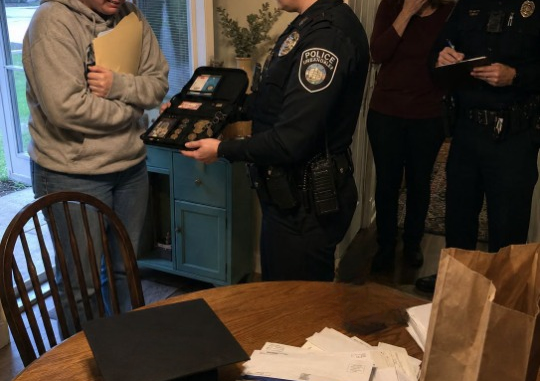
The following morning, two police officers arrived at my door.
My mother had reported that I stole money meant for the party and was trying to ruin Chloe’s birthday. I calmly showed the officers my bank records, receipts, message history, and proof of what had actually happened.
Then they explained why they had come personally.
While taking my mother’s statement, officers discovered something unexpected. Chloe had opened a suitcase in her bedroom closet and found copies of my identification documents, financial records, and two credit cards with my name on them. My mother and stepfather arrived shortly afterward, immediately claiming I had planted the evidence.
But when an officer spoke with Chloe privately, the truth started coming out.
She admitted that their mother had referred to the documents as “backup,” and the story they had created began falling apart.
The investigation revealed that my mother had used her spare key to enter my apartment, copy my personal information, and attempt to open accounts using my identity. Security footage, receipts, and financial records confirmed the evidence, and the false accusation against me was cleared.
The extravagant Sweet 16 celebration was cancelled. I froze my credit, began fixing the damage, and slowly rebuilt the security that had been taken from me.
Months later, Chloe sent me a message apologizing for missing my graduation. I replied cautiously, leaving the possibility of rebuilding our relationship without pretending the pain had disappeared.
My mother continued telling relatives that I had destroyed the family over a birthday party, but the evidence showed the reality.
Eventually, I framed my diploma and placed my glitter-covered graduation cap above it as a reminder of everything I had achieved.
The empty seat at my graduation still hurt. But the new lock on my door taught me something far more important: my future, my finances, and my identity were never meant to belong to people who only valued me when they needed something.
Leave a Reply