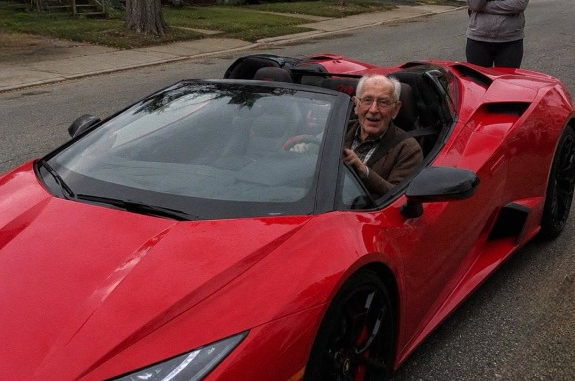
Harold, 85, believed his family would help him cope after losing his wife, Margaret, of 58 years. Instead, one impulsive purchase exposed how differently his three children viewed his future, his grief, and the fortune he and Margaret had spent decades building.
After Margaret’s death, the silence inside their home became unbearable. Her slippers remained beside the bed, her cardigan still hung on a chair, and Harold often reached across the mattress before remembering she was gone. The funeral wasn’t the hardest part—what happened around it was.
His children—Graham, Phoebe, and Julian—appeared loving in front of everyone, comforting guests and standing beside their father. But Harold overheard them arguing beside Margaret’s coffin about who would take her jewelry before the service was even over. He stayed silent because he refused to let his wife’s farewell become a family dispute, but he never forgot what he heard.
Back home, life only grew lonelier. Neighbors visited, yet his children quickly left. None offered to stay. Over the following weeks, each contacted him—not to ask how he was coping, but to discuss his will, the house, and the inheritance they expected.
Harold and Margaret had always lived modestly. They skipped luxuries, drove old cars, and saved carefully so their children would inherit something meaningful. Realizing his children already considered the money theirs left him heartbroken.
Remembering Margaret’s playful promise that one day they would be “young and reckless again,” Harold finally did something they had always postponed. He bought the beautiful luxury car they had admired for years and booked several dream trips using a large portion of their savings.
When his children discovered what he’d done, they rushed to his house furious that he had spent “their inheritance.” Julian even accused him of wasting money Margaret would never have approved of.
That was when Harold placed Margaret’s pearl bracelet on the table. It was the very bracelet she had been buried wearing. He revealed that he had watched them argue over stealing it beside her coffin and had quietly taken it before anyone could.
The room fell silent. Harold reminded them how their mother had sacrificed everything for them—working extra hours, giving up new clothes, even selling treasured family jewelry to help them through difficult times. None of them had known because Margaret never wanted praise.
Slowly, the truth surfaced. Graham admitted they used money to avoid talking about emotions. Phoebe confessed she convinced herself discussing the estate was simply practical. Julian admitted they were frightened by losing the person who had always held the family together.
Harold explained that buying the car had started as revenge, but it became something more. He realized Margaret hadn’t spent nearly six decades loving him so he could spend the rest of his life waiting to die.
He told them he had changed his will. They would still receive something, but most of his estate would go to charities Margaret cared deeply about, including a scholarship fund, a hospice, and a women’s shelter. He refused to reward greed, though he wasn’t trying to punish them forever.
When Graham finally asked what he truly wanted, Harold answered honestly: he wanted children who visited because he was their father, not because they were calculating their inheritance. He wanted them to remember Margaret as a person, not a collection of possessions.
Phoebe apologized for abandoning him in his grief. Graham followed. Julian admitted he didn’t know how to repair the damage, and Harold told him the first step was acknowledging what had happened instead of pretending it never did.
A week later, Harold’s deep green luxury car arrived. His children stood beside him without mentioning its cost. Harold placed Margaret’s bracelet inside the glove compartment before taking his seat behind the wheel.
Asked where he would go first, he smiled and replied, “Anywhere your mother and I kept postponing.”
As the engine started, he remembered Margaret’s words about being young and reckless again. He realized reckless had never meant wasting life—it meant refusing to disappear before life was truly over.
Leave a Reply