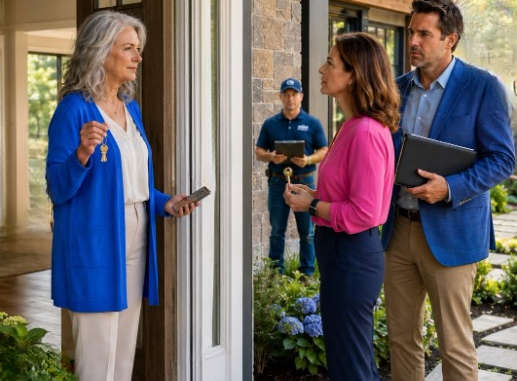
My daughter-in-law treated my spare key as if it were a permanent invitation into my home. She came and went whenever she wanted, rearranged my belongings, made decisions without asking, and slowly began acting as though my house belonged to her.
So one morning, I quietly changed every lock.
When Clara showed up later and her key no longer opened the door, she laughed and called me dramatic. She thought I was making a scene over nothing.
What she didn’t know was that changing the locks was only the beginning.
That same day, I changed something else too.
I changed the way I protected my life.
For years, I had believed that being a good mother meant making things easier for my son. I believed family meant helping without hesitation. But I eventually learned that love without boundaries can become an invitation for people to take more than you ever intended to give.
My name is Ardis Collins, and this is how I finally took my home—and my independence—back.
The house had belonged to my husband Robert and me for thirty-two years. It was the place where we raised our son David, celebrated holidays, marked birthdays, and built a lifetime of memories.
It was also where Robert held my hand during his final moments.
After he passed away, everyone told me the same thing.
“Don’t isolate yourself, Ardis.”
“Let David and Clara help you.”
“You’re fortunate your son is close by.”
And I was grateful.
David was my only child. I loved him deeply. Robert and I had spent our entire lives trying to give him opportunities we never had. We worked long hours, saved carefully, and sacrificed constantly because that was what parents did.
You gave up things in the present so your children could have a better future.
David grew into a successful adult, and I believed he was still the thoughtful little boy I had raised.
After Robert’s death, David became more attentive. He called regularly, brought groceries, checked my car, and reminded me that I no longer had to handle everything alone.
When he and Clara asked for a spare key, I thought it was an act of care.
“Just for emergencies,” David said.
“In case you fall.”
“In case there’s a storm.”
“In case we can’t get ahold of you.”
It sounded reasonable.
It sounded loving.
So I handed them the key.
I didn’t realize I was also handing over access to my privacy.
The first time I noticed something strange, I tried to convince myself I was imagining it.
I came home from grocery shopping and immediately felt like something was different.
Nothing was stolen.
Nothing was damaged.
But the house felt disturbed.
Then I saw my mail.
The basket where I kept my letters was empty.
After searching, I found everything neatly arranged on the hallway table.
Bills stacked together.
Advertisements separated.
A birthday card placed perfectly on top.
Someone had organized my belongings.
Someone had touched things that were mine.
I told myself maybe David had stopped by and thought he was helping.
I ignored it.
Then I noticed the thermostat.
It was set to seventy-two degrees.
I always kept it at sixty-eight.
That small detail mattered because after Robert was gone, routines became anchors. The little things—the temperature, my chair by the window, my coffee cup, my slippers—reminded me that my life was still my own.
I changed it back.
Again, I stayed quiet.
Then I found my slippers.
They had been moved from beside my bed and placed neatly in the hallway, pointing toward the living room.
That was when everything connected.
The mail.
The thermostat.
The moved belongings.
Someone had been entering my home.
Someone who believed they had the right.
And I already knew who.
Clara.
My daughter-in-law lived nearby and had always found reasons to stop by. At first, I thought it was kindness.
Then I noticed something.
She never called.
She never knocked.
She simply walked in.
One morning, I returned home early from my walking group and heard music playing inside.
My heart raced.
For a moment, I thought someone had broken in.
Then I heard Clara singing from my kitchen.
“Clara?”
She turned around happily.
“Oh! You’re back already.”
She stood there opening cabinets and putting away groceries like she belonged there.
“What are you doing?” I asked.
“I brought you healthier food,” she said proudly.
She had replaced my groceries, moved items in my pantry, and rearranged the kitchen.
My kitchen.
The kitchen where Robert and I had spent decades making memories.
“You used your key?” I asked.
She looked confused.
“Yes. You weren’t answering your phone.”
“I was walking.”
“I was worried.”
“I was gone forty minutes.”
She sighed.
“You’re so independent sometimes.”
That sentence stayed with me.
Because I realized she didn’t see my independence as something to respect.
She saw it as something inconvenient.
I calmly told her:
“I need you to stop entering my house unless I invite you.”
Her expression changed immediately.
Not sadness.
Not understanding.
Offense.
“I’m trying to help you,” she said.
“I know you think that.”
“And this is how you respond?”
I didn’t argue.
Because I understood something important.
Someone who truly helps you does not ignore your boundaries and then demand appreciation for it.
That night, David came over.
He wasn’t angry at first, but I could tell he had already heard Clara’s version.
“Mom, Clara is upset.”
“I know.”
“She was only trying to help.”
“David, entering my home without permission is not help.”
“She has a key.”
“For emergencies.”
“What if something happened?”
“Then she can call.”
He looked frustrated.
“Why are you making this such a big deal?”
That hurt more than anything Clara had done.
Because my son wasn’t asking why someone crossed my boundary.
He was asking why I cared.
I looked at him and said:
“No, David. The question is why you’re making my feelings seem unimportant.”
He had no answer.
And that silence told me enough.
The next morning, I opened my computer and reviewed every account Clara and David had access to.
After Robert died, they had offered to help with some bills.
At first, I saw it as kindness.
But over time, those payments became something else.
They started saying things like:
“We already help with the house.”
“We know what’s best.”
“We’re basically managing things.”
Managing.
That word changed everything.
I didn’t need management.
I needed respect.
So I removed their access.
I changed passwords.
I updated my accounts.
I put every document into a folder labeled:
HOUSEHOLD RECORDS — ARDIS COLLINS.
Not because I wanted a fight.
Because I wanted peace.
The next morning, Clara called.
“Did you change the accounts?”
“Yes.”
“Why?”
“Because they are mine.”
“We were helping you.”
“And I appreciated it.”
“Then why remove us?”
“Because I am capable of handling my own responsibilities.”
She laughed.
“You’re being dramatic.”
I had heard that word enough times to understand what it meant.
People often call you dramatic when your boundaries prevent them from doing what they want.
“I’m setting boundaries, Clara.”
“Between family?”
“Yes.”
She became quiet.
Then she said:
“David won’t like this.”
Maybe she expected that to scare me.
It didn’t.
“I’m sure David will have feelings about it.”
She hung up.
Three days later, I saw Clara arrive with a contractor.
I was working in my garden when she approached my house.
“I wanted to surprise you,” she said.
The contractor looked uncomfortable.
“We were told we could measure the kitchen.”
I turned toward Clara.
“Who told you that?”
“I did.”
“Why?”
“Your kitchen needs updating.”
I stared at her.
“You scheduled renovations in my home?”
“We’re just looking.”
“No.”
I looked at the contractor.
“You don’t need to return.”
Clara looked embarrassed.
“You’re making this difficult.”
“No. I’m telling you no.”
Then I held out my hand.
“Give me the key.”
Her expression changed.
“You don’t trust me?”
“I trusted you.”
I paused.
“That was the mistake.”
She refused.
“It belongs to David.”
“No,” I said.
“It belongs to my house.”
That afternoon, I called a locksmith.
Every lock was changed.
Front door.
Back door.
Garage.
Side entrance.
When the locksmith handed me the new keys, I felt something I hadn’t felt in months.
Peace.
But I wasn’t finished.
Because protecting the doors wasn’t enough.
I needed to protect my future.
I went through every legal document, updated my accounts, reviewed my will, and met with an attorney.
Not because I wanted conflict.
Because I wanted control over my own life.
The attorney listened carefully as I explained everything.
The key.
The surprise visits.
The contractor.
The questions about my house.
Then she asked:
“Do you have updated legal protections?”
I realized I didn’t.
She helped me create them.
And before I left, she told me:
“Planning for yourself is not disrespecting your family. It is respecting yourself.”
Those words stayed with me.
Later that evening, I found an old note from Robert.
His handwriting immediately brought tears to my eyes.
It said:
“Never let anyone convince you that kindness means surrendering your choices.”
I sat there holding that note for a long time.
Because Robert had always understood me.
He knew I gave too much.
He knew I avoided conflict.
He knew I confused keeping peace with accepting pain.
The next morning, Clara appeared at my door.
She tried her key.
Once.
Twice.
Three times.
It didn’t work.
I watched her expression change from confusion to anger.
Then she saw me standing inside.
“You changed the locks.”
“Yes.”
“You actually did it.”
“Yes.”
She laughed.
“You’re being dramatic.”
I looked at her calmly.
“No, Clara. I’m finally taking myself seriously.”
For the first time, she had no answer.
Because she finally understood something.
The house was never hers.
The decisions were never hers.
And my life was never hers to manage.
It was mine.
And I had finally taken it back.
Leave a Reply