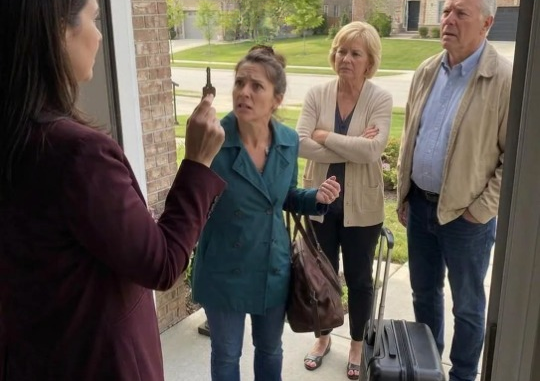
The moving truck arrived at my new home at exactly 10 a.m. on Sunday morning, stopping in my driveway as if it belonged there. From my kitchen, I watched with my untouched coffee in hand as my sister Brooke stepped out wearing leggings and a baseball cap, immediately pointing toward the upstairs rooms like she had already claimed them. My parents followed behind her. My mother carried a tote bag, while my father surveyed my yard with the expression of someone preparing to take control of the property.
Brooke walked straight to my bright blue front door and turned the handle.
Nothing happened.
She frowned and tried again.
Then she pulled out an old key—the spare key my mother had kept from my previous apartment, despite having no reason to still possess it.
It didn’t work.
That was the first moment all morning when I smiled.
My name is Jenna, and I bought that modest brick house in Charlotte after nine years of working overtime, living cheaply, skipping vacations, and driving a car that had already passed 150,000 miles. I was thirty-one years old, single, and working as an operations manager for a logistics company. The day my realtor handed me the keys, I cried in the kitchen because sunlight poured through the windows and the entire place finally felt like something I had earned.
The house had three bedrooms, a fenced backyard, and a mortgage that belonged only to me. I had saved $64,000 for the down payment and closing expenses, tracking every dollar carefully because I understood my family’s habits. For years, my parents had treated anything I earned as something they could borrow, redistribute, or use to solve Brooke’s latest crisis.
That was why I kept the purchase private.
Only my lender, my realtor, and my closest friend Olivia knew.
The secret didn’t last.
My mother discovered a closing document that had been mailed to my old apartment—a place where she still had a spare key for supposed “emergencies.” When I returned home from buying supplies at a hardware store, I found my parents’ SUV parked outside and Brooke already inside my living room, standing on my new rug with her shoes on.
My mother was opening cabinets.
My father was studying the hallway like he was evaluating renovations.
Brooke casually announced that her lease was ending soon and that she would take the upstairs bedroom with the largest window.
When I told them that wasn’t happening, they accused me of being selfish, unreasonable, and cold. They acted as though owning extra space automatically meant I was obligated to give it away.
I told them to leave.
That same night, I called a locksmith, changed every lock, installed a video doorbell, and saved recordings of them entering my home without permission.
Three days later, they came back—with movers.
When the new locks stopped them from opening the front door, my father walked back to his truck, grabbed a crowbar, and headed toward the backyard gate.
I didn’t go outside to argue.
I didn’t scream.
I didn’t give them another chance to twist the situation.
Instead, I called the police and reported the attempted forced entry, trespassing, and damage to my property. Then I sat at my kitchen table with my deed, identification, mortgage paperwork, insurance documents, and locksmith receipt organized in a folder.
When officers arrived, my mother immediately tried to frame the situation as a simple family disagreement. She claimed Brooke was being denied access to “her own home.”
I handed over the documents and the doorbell footage.
I explained that I was the only person listed on the deed, no one else had ownership rights, and nobody had permission to move in.
The officers told my family to load the truck and leave. If they refused, the situation would become a legal matter.
Later, my attorney confirmed what I already knew: my house was not a family property, not a shared investment, and not a backup plan for someone else’s problems.
It was mine.
Completely and legally mine.
Six months later, my family still tells people that I “kicked them out over one weekend,” but I stopped trying to correct every version of their story.
Olivia helped me repair the damaged gate. I planted tomatoes in the backyard and transformed the bedroom Brooke had already claimed into a peaceful office with a reading chair beside the window.
The holidays felt uncomfortable at first. Sometimes the distance hurt more than the argument itself.
But eventually, the quiet became something else.
Peace.
I learned that people who truly respect you can accept the word no without trying to punish you for saying it.
Every morning, I walk downstairs, watch sunlight spread across my kitchen floor, and remember exactly what I worked so hard to earn.
Not just a house.
A home.
And the right to lock the door.
Leave a Reply