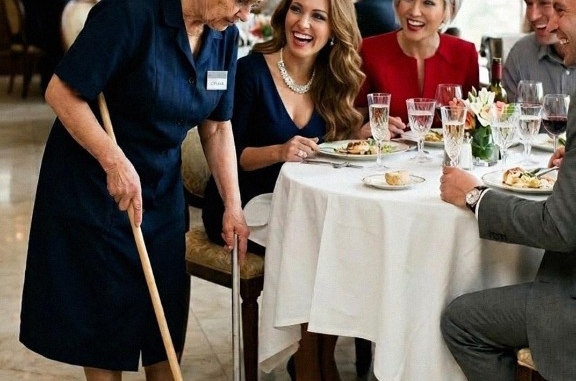
A quiet anniversary dinner turned unforgettable when Claire saw unkindness she couldn’t ignore. As her husband stepped up to intervene, what began as humiliation for one elderly woman became a powerful lesson in courage, empathy, and the quiet strength of standing up for what’s right.
Fifteen years of marriage deserved a special night. Between raising two kids, juggling work, and managing endless daily tasks, David and I hadn’t had a night solely for us in far too long.
So when he told me he’d reserved a table at one of the city’s most elegant restaurants, I could barely contain my excitement.
This wasn’t our usual takeout-on-the-couch routine. Walking in hand in hand, the soft glow of chandeliers and gentle piano music made me feel that spark we’d forgotten amidst life’s chaos. I wore my navy dress, the one David always said made my eyes lighter, and noticed the faint scent of starch on the shirt he’d carefully ironed.
Seated by the window, we toasted 15 years together—15 years of rushed mornings, chaotic dinners, and long workdays. For a moment, it was just us again. We laughed about our kids, shared small memories, and felt fully present.
Then the atmosphere shifted.
Two flashy couples entered, exuding wealth and entitlement. Their loud, exaggerated conversation carried across the restaurant. I tried to ignore them, but their remarks soon turned cruel. When a wine glass spilled, an elderly cleaning woman bent to clean it. Immediately, the guests began mocking her age, her shoes, and even her presence. Their laughter was sharp and unrelenting.
My stomach tightened as I watched her shake under the ridicule. “Are you hearing this?” I whispered to David.
He didn’t answer at first. Then, with quiet certainty, he rose from the table and approached their group. The room seemed to pause. Heads turned. The laughter faltered.
“Let me help you with that,” David said to the cleaner. She protested, but he insisted. Then he addressed the mocking guests directly: “The way you just spoke to this woman has cheapened this restaurant. No one should have to endure humiliation.”
Silence fell. The manager stepped in and asked the disruptive table to leave. Slowly, they rose and walked out, muttering in disbelief. The restaurant began to applaud.
The older woman, Martha, came to thank us through tears. “You gave me my dignity back,” she said.
We slipped an envelope of money into her hands, calling it gratitude rather than charity. Her tears flowed freely as she realized the gesture. A week later, she mailed a thank-you card telling us how she used the gift for her granddaughter’s nursing textbooks and how our actions reminded her that kindness still exists.
Months later, we met Martha and her granddaughter, Emily, at a coffee shop. Emily blushed and thanked us for enabling her studies and inspiring her to help others.
That anniversary night had started with cruelty, but it ended with a ripple of goodness, proving that quiet acts of courage and compassion can leave lasting impact.
Goodness, I realized, doesn’t need applause. It moves quietly, changing lives without asking for recognition.
Leave a Reply