I learned about the family reunion from Facebook.
Not from my mother. Not from my younger sister, Paige. Not from any aunt, cousin, or family group chat I’d apparently been removed from months earlier. Just a bright photo of my mother standing outside a rented lakeside lodge in northern Michigan, captioned: Can’t wait for the whole family to be together this weekend!
The whole family.
I sat in my apartment in Grand Rapids, staring at it as my coffee went cold. And like I always did when my family made a point without saying it directly, I stopped waiting for fairness and started thinking in practical terms instead.
The reunion was set near Blackwater Lake, a place lined with old cottages and long-standing family tensions dressed up as summer tradition. My grandfather used to take us there before he passed. After that, my mother, Linda Mercer, started treating memory like something she could assign unevenly—offering it more freely to Paige than to me.
Paige was two years younger, emotional when it benefited her, sharp when it didn’t, and skilled at turning consequences into sympathy. My mother called her sensitive. I called her protected.
So when I realized I’d been excluded again, I didn’t argue or ask questions. I didn’t try to get an invitation.
I contacted a realtor.
Within days, I closed on a small cedar cottage less than half a mile from the lodge. Nothing extravagant, but it had lake access, a porch, and a clear title—and most importantly, it was mine. I bought it through a holding company set up years earlier for legal separation and privacy. The paperwork was finalized the same day.
By Friday evening, I was there with my dog, an overnight bag, and groceries, settling into a quiet I hadn’t been given—I’d chosen.
The first couple of days were calm. I kayaked, read on the dock, and watched vehicles come and go from the lodge up the hill. A few relatives messaged when they realized I was nearby. I kept my responses short. My mother stayed silent.
That silence told me more than words ever could.
She was planning something.
She arrived Sunday morning at 10:12.
And she didn’t come alone.
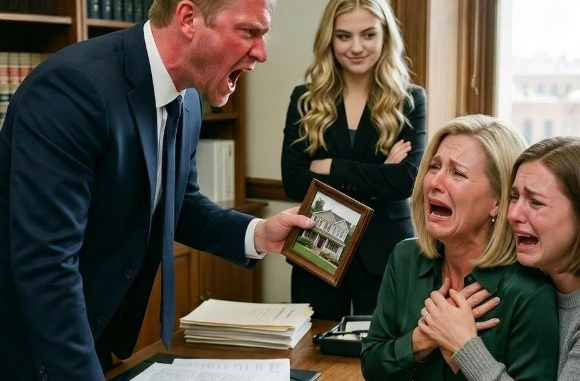
Her SUV pulled into my driveway, followed by a county vehicle and another truck. My mother stepped out dressed neatly, already wearing the expression she used when she expected compliance. Paige followed, sunglasses on, performing fragility. A county assessor held a clipboard. A deputy stood nearby.
They thought they were arriving with authority.
What they didn’t know was that I had already been warned something like this might happen. My lawyer was already involved. And the cameras on the porch were already recording everything.
My mother walked up first, speaking like this was a misunderstanding waiting to be corrected.
But I stopped her immediately.
I told her to leave.
That’s when the performance began.
She claimed the property was meant for Paige. Paige acted offended on principle. The assessor looked increasingly unsure. The deputy started paying closer attention than they expected.
Then my attorney stepped outside behind me.
And the tone changed.
She laid out the facts clearly: the property was legally purchased, the deed recorded, and there was no dispute of ownership. No family claim, no legal ambiguity, no room for reinterpretation.
The assessor quickly began distancing himself from the situation. The deputy asked direct questions that exposed how misleading the visit had been framed. My mother tried to repackage it as a “family misunderstanding,” but that didn’t hold once paperwork replaced emotion.
What they had relied on—pressure, expectation, guilt—didn’t work in a setting built on documentation and law.
The deputy confirmed there was no ownership issue. My attorney confirmed the title. And just like that, the situation stopped being negotiable.
My mother warned me I’d lose the family over this.
I told her I was already prepared for that outcome.
Paige left crying. My mother left angry. The assessor left quietly. The deputy stayed only long enough to file the necessary report.
Afterward, the lake went still again, as if nothing had happened.
And maybe that was the point.
People like my family rely on confusion, on unspoken rules, on the assumption that I would eventually step back to keep things smooth. But documents don’t care about expectations. Cameras don’t forget. And once everything is recorded, performance stops working.
I wasn’t alone that day.
I just wasn’t performing like I was.
Leave a Reply