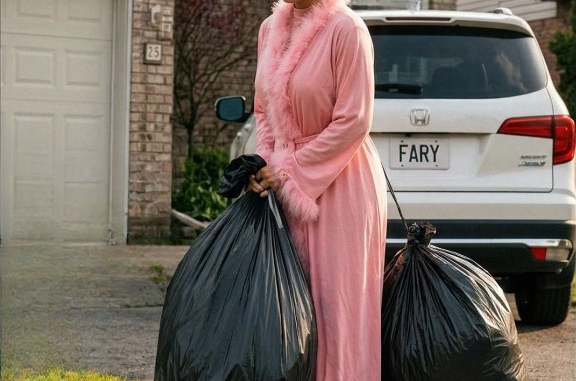
Barbara collapsed beside the curb just after sunrise, one hand pressed against the pavement and the other still clutching a heavy black contractor bag. Before I could even put down my coffee, my wife, Anna, rushed across the street to help her. Barbara’s face had lost its color beneath her makeup, and the scarf covering her head had slipped enough to reveal thinning patches of hair. Even in obvious pain, she pleaded with us to move the bag before the garbage truck arrived. In that moment, I realized the mystery I had been trying to solve from my kitchen window wasn’t harmless curiosity—it was someone’s private heartbreak, and I had already gone too far.
For nearly two weeks, Barbara had carried one or two oversized black bags from her perfectly kept home every morning at exactly seven o’clock. Eventually, my curiosity got the better of me. One morning after she drove away, I opened one of the bags. Inside were neatly folded teenage clothes, school notebooks, a stuffed bunny, and family photos labeled Emily. Later, our longtime neighbor, Mrs. Patterson, told us Emily had been Barbara’s 16-year-old daughter. Eleven years earlier, Emily had stormed out after an argument and was tragically killed by a drunk driver. Barbara’s son, David, blamed his mother for what happened and never came back home.
When we entered Barbara’s house, the truth became even clearer. Prescription bottles lined the kitchen counter, and her calendar was filled with oncology appointments. I admitted that I had looked inside one of the bags, and the disappointment on her face filled me with instant regret. Then she quietly shared the reason behind everything. She had stage-four ovarian cancer and had been told she likely had only a couple of months left. The clothes, books, and keepsakes—worth nearly $2,400—were being donated to a charity that supported teenage girls. David had finally agreed to come home, and Barbara believed clearing out Emily’s room before he arrived might spare him more pain. Anna gently asked the question Barbara had never considered: had she ever asked David what he wanted? Together, we sorted Emily’s belongings into donations, treasured keepsakes, damaged items, and a final group that David could decide about himself. Barbara had already met with her attorney, updated her estate plan, reviewed her life insurance, organized the mortgage, and adjusted investment accounts to cover medical expenses. She wanted to leave everything in order. But paperwork couldn’t heal the grief that still lived inside Emily’s bedroom. When David finally returned, he sat alone on his sister’s bed for nearly an hour. Later, he admitted that holding onto anger had been easier than facing his loss, while Barbara finally accepted that one painful argument had not caused the drunk driver’s actions.
David remained by his mother’s side throughout the final two months of her life. He drove her to treatments, Anna prepared meals, Mrs. Patterson cared for the garden, and I kept Barbara’s silver SUV clean. Some days, mother and son spent hours talking in Emily’s room. Other days, they quietly left the door closed. Barbara passed away in early September, but before she did, David finally told her that Emily’s death had never been her fault. He kept the family home, choosing to preserve it as a place where both joyful memories and painful ones could exist together. Whenever I look across the street now, I’m reminded how quickly curiosity can become judgment—and how often we create stories about people without knowing the sorrow they’re carrying.
Leave a Reply