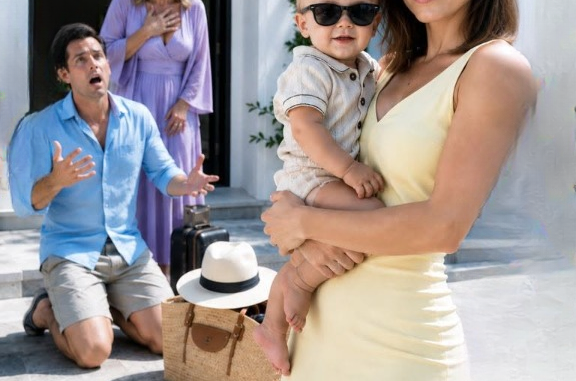
My one-year-old son was burning with a 104-degree fever, but my mother-in-law, Diane, simply dismissed my concern.
“You’re being dramatic. He’ll feel better tomorrow, and we are not canceling our Hawaii vacation.”
I looked at my husband, Mark, hoping he would defend our child.
Instead, he packed his suitcase.
“Your mother has raised children before. She knows what she’s talking about,” he said.
I couldn’t believe what I was hearing.
“Our son can barely stay awake, and you’re leaving?”
“It’s only a week, Claire. You always turn everything into a disaster.”
That was the moment something inside me changed.
For years, Mark and Diane had convinced themselves that I was too emotional, too dependent, and too willing to tolerate anything.
They forgot who I was before I became a wife and mother.
Before Ethan was born, I worked as a forensic accountant. I knew how to uncover hidden money, track suspicious transactions, and find the truth buried beneath paperwork.
The moment their car disappeared down the driveway, I stopped arguing.
I grabbed Ethan and rushed him to the hospital.
The doctors discovered he had a serious kidney infection that was already beginning to turn into sepsis.
“If you had waited another day,” the doctor told me, “the outcome could have been very different.”
Sitting beside my son’s hospital bed, I realized I had been ignoring warning signs for years.
While Ethan slept, I opened my laptop and reviewed the financial records I had quietly saved.
The truth was worse than I imagined.
Mark had drained our savings, taken out loans against the house, and moved hundreds of thousands of dollars into accounts connected to Diane.
Then I found something even more disturbing.
He had forged my signature on financial documents.
I looked at my son and whispered,
“They chose the wrong person to underestimate.”
By the time Ethan began recovering, I had already contacted my former supervisor, my attorney Naomi, and my father.
They helped me organize every piece of evidence.
My father, who Mark thought only ran a small bookkeeping business, actually specialized in financial investigations.
The numbers shocked everyone.
Nearly half a million dollars had been taken through hidden transfers, fake invoices, and unauthorized loans.
Naomi told me not to confront them yet.
“Let them believe they’re winning,” she said. “People reveal the most when they feel safe.”
While Ethan recovered, Mark sent pictures from Hawaii.
Luxury meals.
Poolside drinks.
Smiling vacation photos.
Then he asked if I had paid his credit card bill.
He never asked about Ethan’s condition.
Not once.
That was all the confirmation I needed.
I filed for emergency custody, protection of our assets, and control of the house.
The evidence was overwhelming.
When Mark and Diane returned from Hawaii, they walked into a home filled with documents waiting for them.
The divorce papers.
The custody order.
The financial investigation.
The evidence of fraud.
Mark called me immediately.
“What did you do?” he shouted.
“I protected my son,” I replied.
“You froze my accounts!”
“The court did that after discovering you forged my signature.”
Diane tried to defend him.
“Those were family decisions!”
“No,” I said. “They were crimes.”
At the custody hearing, Mark tried to claim I had exaggerated Ethan’s illness.
Then the doctor testified.
“She was not exaggerating. That child was dangerously close to septic shock.”
The judge reviewed the messages proving Mark knew about Ethan’s condition and still left.
Then the financial evidence was presented.
Fake loans.
Missing money.
Fraudulent business payments.
Vacation expenses paid through Diane’s company.
Their story collapsed.
The court awarded me temporary custody and restricted Mark’s visits.
Soon after, his employer terminated him and investigators began looking into the financial fraud.
Months later, Mark admitted guilt for forgery and fraud.
The divorce was finalized the following year.
I sold the house and used part of the money to create support for parents facing medical emergencies with their children.
I also returned to forensic accounting.
A year later, Ethan was healthy, happy, and running through our new home laughing.
My father once asked if I regretted what happened to Mark.
I watched my son playing and answered,
“I didn’t ruin his life. I just stopped protecting him from the consequences of his choices.”
And for the first time in years, everything felt peaceful.
Leave a Reply