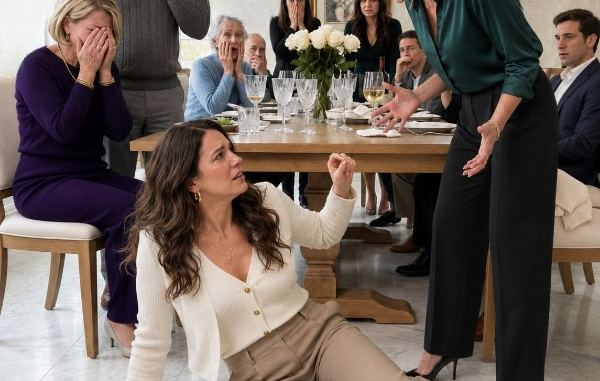
At a holiday lunch, my mother leaned in close and quietly told me, “It’s time you stopped depending on the family.” No one else at the table reacted. I drove home in silence, opened my laptop, and methodically removed every bill, loan payment, and cabin expense I had been quietly covering for years. Three days later, my brother called in a panic because the cabin heat had been shut off. A week after that, my mother received a legal notice she never expected.
I remember passing the bread basket to my older brother, thinking the whole room felt rehearsed—like everyone was performing roles they had long since perfected.
“More potatoes?” my mom asked brightly.
“Sure,” my dad replied, smoothing his napkin as if appearances mattered more than anything else.
Bobby cracked a joke about winter weight. Steven nodded along about the weather. My mother laughed in small, controlled bursts, like even her joy had rules.
When I reached for the gravy, she leaned slightly toward me, her perfume cutting through the smell of the meal.
Without looking at me, she said quietly, “Kinsley, you need to stop relying on the family.”
My hand froze.
For a second, I wondered if I’d misheard her. The words felt too precise, too prepared, for an ordinary dinner.
“Sorry?” I asked.
She set down her fork, dabbed her lips, then finally turned toward me.
“You need to grow up,” she said calmly. “We can’t keep carrying you.”
The room didn’t go quiet.
That was the point.
The conversation continued. Glasses clinked. My father kept eating. No one questioned it. No one softened it.
Their silence confirmed everything.
My mind flickered through years of memories too quickly to hold in one place.
Me at nineteen, picking Steven up at 3 a.m. because he didn’t want to pay for a cab.
Me at twenty-two, handling Bobby’s hospital paperwork while he joked with nurses.
Me at twenty-five, managing taxes, utilities, and repairs because I was “good at that sort of thing.”
Me months ago, quietly paying the cabin heating bill so a weekend wouldn’t be “ruined.”
Year after year of fixing, covering, absorbing.
And somehow, I was the one being supported.
“Mom just means you need independence,” Steven said without looking at me. “You’ve seemed… distant.”
Distant.
I almost laughed.
Distant was what they called you when you stopped being instantly available.
Bobby shrugged. “If you’re struggling, just say it. No judgment.”
There it was—the version they preferred.
Not the years I carried them.
Not the dependence they benefited from.
Just me as the problem.
I looked at my mother. She met my eyes briefly—calm, certain. This hadn’t been impulsive. She had chosen the moment carefully, expecting collapse, excuses, or compliance.
Instead, I said, “Okay.”
Her expression shifted, just slightly.
That wasn’t the response she had planned for.
I stood, pushed my chair back, and the sound cut through the room. My father glanced up. Steven shifted. Bobby watched like it was entertainment.
“I’m leaving,” I said.
“Don’t be dramatic,” my mother replied.
“I’m not,” I said. “I understand perfectly.”
That unsettled her more than anger would have.
I walked out.
No one stopped me.
Outside, the cold air hit sharp and honest. I stood there for a moment listening to the muffled continuation of dinner without me, then got into my car.
In the silence, there was no shaking. No tears.
Just clarity.
They genuinely believed I depended on them.
And that realization made the whole structure of my life feel different in hindsight.
I started the engine and drove away as the house shrank in my mirror—warm, bright, unchanged.
The kind of place where everything looks perfect as long as you don’t notice who disappears to keep it that way.
Leave a Reply