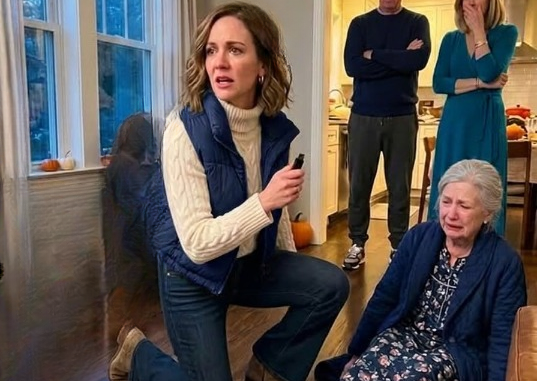
I came home for Thanksgiving expecting warmth and family, but instead I walked into a freezing house and a note on the counter: “We’re in Cancun. You handle Grandma.”
The moment I stepped inside, the cold hit me like a shock. The thermostat read 49 degrees, my breath visible in the air, and the familiar comfort of my parents’ home in Ohio felt completely gone. Upstairs was empty. Downstairs was worse. My grandmother’s room was a mess—her walker knocked over, her phone missing, and no sign of her except a faint sound from the living room.
I found her on the floor beside an unplugged space heater, wrapped in a slipping blanket, barely able to speak. She was shivering, disoriented, and clinging to my wrist with surprising strength. Before I could call for help, she pressed something into my hand: a flash drive.
“Don’t tell them yet,” she whispered. “They took my phone. They wanted me to sign.”
Sign what? I asked. She told me my parents had been pressuring her to hand over power of attorney, her house, and her finances, insisting she wasn’t capable of managing them. When she refused, they left her alone in a freezing house and took off on vacation.
When I finally called 911, I didn’t mention what she gave me. But I made a decision in that moment: I wasn’t leaving anything unexamined again.
Three days later, my family returned from Cancun as if nothing had happened. Suitcases rolled in, sunburns still fresh, voices light and careless. My mother barely reacted when I told her Grandma had been hospitalized with hypothermia. My father dismissed it. My brother shrugged it off. They all acted like it was an inconvenience, not a crisis.
But I had already seen too much.
The heater had been unplugged. The phone hidden. And Grandma’s flash drive told a much darker story—bank transfers, legal documents, and recordings showing my parents pressuring her to sign over control of everything. There were messages about “waiting her out” and even jokes about making her uncomfortable enough to comply.
When I confronted them, they didn’t panic. They minimized. They blamed her. They called it confusion, exaggeration, bad timing. But they didn’t notice I had been recording everything since they walked in.
The shift came when I mentioned the police.
By the time Detective Alvarez arrived, the truth could no longer be contained behind excuses. Statements broke apart. Contradictions surfaced. My brother eventually admitted they had planned to leave Grandma alone long enough to “wear her down.” My father tried to explain it as family pressure. My mother called it misunderstanding. None of it held.
The evidence said otherwise.
Messages. Financial records. Audio files. Medical testimony confirming she had been left in unsafe conditions. And my recording of their reaction when confronted.
In the end, charges followed: elder neglect, financial exploitation, and assault. My father was arrested. My mother and brother faced legal consequences. What they had dismissed as “family business” became a criminal case.
Grandma recovered slowly in the hospital. When I visited her, she wasn’t angry anymore—just tired in a way that went deeper than illness.
“I kept hoping they’d remember who they were,” she said quietly.
I didn’t know what to say to that.
The case moved through court over the following months. Evidence held. The truth didn’t bend. And for the first time, my grandmother was treated as someone whose voice mattered.
Eventually, she left the house behind and started over somewhere small and warm, closer to me.
That first Thanksgiving after everything, we didn’t recreate the old traditions. We didn’t pretend. We just sat together with takeout food, a simple table, and silence that finally felt safe.
At one point she said softly, “I miss who I thought my family was.”
I told her I understood.
And for the first time in a long time, the house didn’t feel cold anymore.
Leave a Reply