Melissa and her husband, Rodgers, had spent nearly four years navigating the long, emotional adoption process. They completed endless paperwork, endured home inspections and interviews, and survived years of waiting while watching other families be matched before them. After countless disappointments, they finally received the call they had dreamed of: a baby girl was waiting for them.
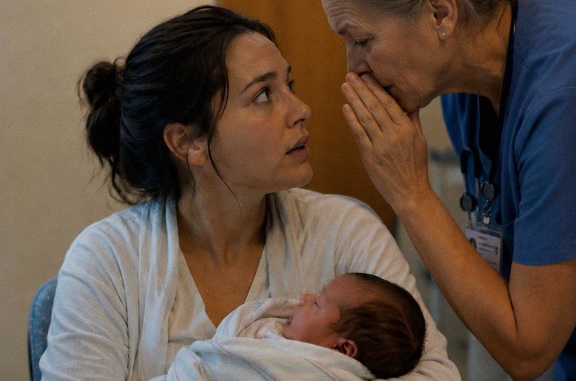
At the hospital, they were overwhelmed with joy. Their daughter lay peacefully in the nursery, and hospital staff congratulated the couple as they prepared to complete the adoption. Everything seemed perfect until a nurse named Rhoda quietly leaned in and whispered to Melissa:
“The biological mother didn’t consent.”
The words shattered Melissa’s happiness. Unsure what they meant, she watched Rodgers happily bond with the baby while she wrestled with growing doubt. Unable to ignore the warning, she sought out Rhoda, who cautiously directed her to Room 418, where the baby’s birth mother was recovering.
There, Melissa met Cindy, a young woman exhausted from childbirth and emotionally drained. Melissa gently asked whether she had been pressured into placing her baby for adoption.
At first, Cindy denied it, but eventually she revealed the truth.
She had willingly chosen adoption because she believed she couldn’t provide the life her daughter deserved. However, she had wanted an open adoption, allowing her to receive occasional updates and photos as her daughter grew. Her parents, Rita and William, insisted on a closed adoption, believing complete separation would help Cindy move on. They even threatened to withdraw their financial support if she refused.
Soon Cindy’s parents entered the room, and an emotional confrontation followed. Melissa made it clear she could not build her family on a decision that ignored the birth mother’s wishes. Cindy tearfully explained that she wasn’t trying to keep custody of her daughter—she simply wanted reassurance that her child would be safe, loved, and happy.
Melissa was deeply moved.
She promised that if the adoption moved forward, she would honor Cindy’s wishes by keeping the adoption open within clearly defined boundaries.
Cindy requested only one email each year on her daughter’s birthday, along with photographs and updates about her life. She hoped that, if the child ever wanted to meet her when she was older, they could decide together at that time.
Melissa agreed.
She returned to Rodgers and told him everything. After listening carefully, he immediately supported her decision, saying he would rather lose the adoption altogether than wonder whether they had accepted a child under circumstances that weren’t truly fair to her birth mother.
The adoption agency had to revise the legal paperwork, and there were difficult conversations to ensure Cindy’s actual wishes were properly documented. Once Cindy confirmed, in front of hospital staff and social workers, that she wanted an open adoption, new agreements were prepared reflecting those terms.
Eventually, everyone signed the updated documents.
The next day, Melissa and Rodgers brought their daughter—whom they named Makena—home.
They faithfully kept their promise.
Every year on Makena’s birthday, Melissa sends Cindy a thoughtful email describing Makena’s personality, milestones, interests, and adventures, along with recent photographs. Cindy always replies with gratitude while respectfully honoring the boundaries they established.
Makena has always known, in an age-appropriate way, that Cindy gave birth to her and lovingly chose adoption because she wanted the best possible future for her. She understands that families can be created through love in different ways.
Ten years later, Melissa often reflects on the day everything could have unfolded differently. She realizes their family was built not through secrecy, but through honesty, compassion, and respect for everyone involved.
Makena calls Melissa and Rodgers Mom and Dad, and they are unquestionably her parents. Cindy remains an important part of Makena’s story—not as a replacement parent, but as someone whose love and difficult decision helped shape her life.
Looking back, Melissa believes that making room for the truth didn’t diminish their family’s love—it allowed it to grow even stronger.
Leave a Reply