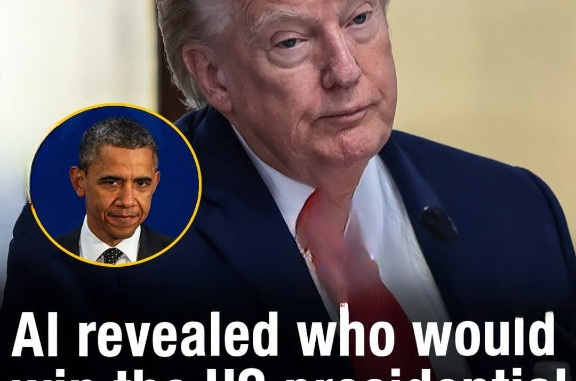
Picture a fictional 2028 U.S. presidential election featuring Donald Trump and Barack Obama. Although such a contest is not permitted under the U.S. Constitution, the idea has still gained traction online and even led to AI-generated speculation about how it might unfold.
According to the AI’s analysis, this imagined race would likely stand out as one of the most closely followed and high-stakes political matchups in recent history. Instead of centering purely on policy differences, it would probably highlight two contrasting leadership styles and competing visions for America’s direction.
In this hypothetical scenario, Obama would likely focus his campaign on themes such as unity, stability, and restoring confidence in government after a period of political turbulence. His message would resonate most with voters seeking a calmer, more traditional approach to leadership.
Trump, meanwhile, would likely continue to emphasize the core themes of his political identity—challenging established institutions, pushing for major change, and positioning himself as an outsider. His approach would likely energize supporters who prefer direct communication and disruptive politics.
Based on these assumptions, the AI suggested that Obama might hold a slight advantage in this fictional contest, particularly among voters prioritizing stability after years of division. However, it also emphasized that the race would remain extremely competitive, reflecting the deep political polarization in modern U.S. politics.
It is important to note that this scenario is entirely speculative. The 22nd Amendment of the U.S. Constitution prevents any individual from being elected president more than twice, making a real 2028 Trump–Obama matchup impossible.
Still, scenarios like this continue to draw interest because they encourage reflection on leadership qualities, voter priorities, and the direction of political sentiment. Whether people lean toward continuity or change, such discussions often reveal more about public attitudes than about the individuals themselves.
Ultimately, this is not a forecast, but a purely hypothetical exercise exploring how an imagined election might look if constitutional restrictions did not exist.
Leave a Reply