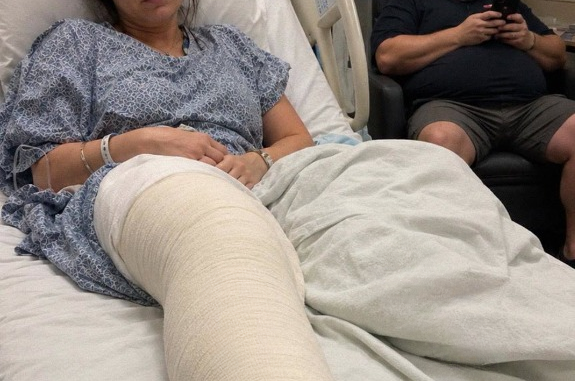
Two months before my wedding, I broke my leg and suddenly found myself completely dependent on my fiancé, Adam, for even the smallest daily tasks. Everyone around us kept saying how lucky I was to have someone so attentive and devoted. At first, I believed them without question.
At the hospital, Adam held my hand, smiled for the nurses, and promised he would take care of everything. He sounded so calm, so reliable, so certain that I never doubted him. He played the role of the perfect fiancé so convincingly that even strangers trusted him immediately.
But everything shifted once we got home.
The man who had been warm and reassuring in public became distant and impatient behind closed doors. He spent most of his time in his gaming room, headphones on, while I struggled with basic needs I could no longer manage alone. When I asked for water, help moving around, or assistance with simple things, he sighed as if I were interrupting him.
I kept trying to explain it away. Maybe he was overwhelmed by the wedding planning. Maybe I was being too needy. Maybe recovery was just making me overly sensitive. But deep down, I started to feel the gap between who I thought he was and how he was actually treating me.
One night, I woke up in severe pain after missing my medication. I called for Adam repeatedly, but he stayed in his game, laughing with friends. When he finally came to the doorway, he didn’t offer help—he just told me to stop acting like a child.
Something inside me shifted in that moment, quietly but permanently.
The next morning, my mother visited and immediately noticed how drained and neglected I looked. When I finally told her everything, she didn’t hesitate—she told me to come stay with her so I could recover properly, away from the constant stress.
While I was at her house, things began to come into focus. A conversation with my wedding coordinator revealed something I never expected: Adam had recently asked about cancellation policies and even visited our wedding venue with another woman, discussing plans that didn’t include me.
Suddenly, all the distance, the irritation, and the emotional withdrawal made sense in a way I couldn’t ignore anymore.
The man I was preparing to marry had already started living as if our future together was optional.
A few days later, I returned to the apartment and confronted him directly. At first, he denied everything, brushing it off as a misunderstanding. But when I mentioned what I had learned, his confidence cracked, and he had no real explanation for his actions.
That was the moment I took off my engagement ring, placed it on the table, and ended the engagement.
It hurt more than I expected, but over time, the pain turned into clarity. I realized I hadn’t lost a future—I had avoided one that was never going to be safe or equal. My injury didn’t ruin my life; it revealed the truth I would have otherwise missed.
By the time my cast came off, I wasn’t just physically recovering. I was rebuilding my life with a clearer sense of boundaries, self-worth, and what real care is supposed to look like. And for the first time in a long while, my future finally felt like it belonged to me again.
Leave a Reply