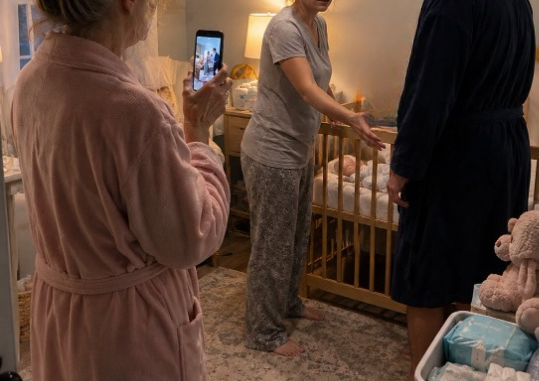
The sound of my grandson crying pulled me awake a little after three in the morning. During the two months I had been living with my daughter, Mia, her husband, Caleb, and their newborn son, Noah, those late-night cries had become routine. Expecting nothing more than another feeding or diaper change, I quietly walked toward the nursery. But the moment I reached the doorway, I froze. Mia stood beside the crib, desperately trying to comfort her baby while Caleb calmly insisted she let him cry. His voice never rose, yet something about the scene felt unsettling. Without thinking twice, I quietly started recording on my phone. Watching my strong, independent daughter fall silent and avoid eye contact made me realize that something far more troubling was happening behind the walls of that home.
By the following morning, my concerns were brushed aside. Caleb, backed by his well-connected parents, insisted I had completely misunderstood what I’d witnessed. They spoke with the confidence of people who believed their version of events would never be questioned. Before long, they presented me with a generous check and legal paperwork, subtly encouraging me to accept the money, leave, and stay quiet. They assumed I was simply an elderly widow with nowhere else to turn. What they didn’t know was that after my husband’s passing, I had spent years managing our family’s investments and working closely with organizations that supported vulnerable families. Instead of confronting them, I stayed calm, listened carefully, and allowed them to believe I had accepted defeat.
While Caleb congratulated himself for getting me out of the way, I quietly began documenting everything. Every conversation, recording, and observation helped reveal the reality my daughter had been living through. With the help of trusted attorneys and professional contacts, I preserved the evidence and built a detailed record of what was happening inside the home. Meanwhile, Mia continued caring for Noah while trying to keep the peace. I knew rushing in too soon would only give them the opportunity to explain everything away, so I waited until every piece was in place and every fact was supported.
The turning point came during what Caleb believed would be my farewell gathering. Instead of saying goodbye, the front door opened to attorneys and investigators carrying documents, recordings, and evidence that dismantled the carefully crafted image he had presented to everyone. His confidence disappeared almost instantly. Yet the most powerful moment wasn’t the legal confrontation—it was watching Mia finally find the courage to speak openly. She chose honesty over fear, and with that single decision, everything began to change. In the months that followed, she built a new life focused on healing, independence, and raising Noah in a healthier environment. Looking back, I realized the most important thing I discovered that night wasn’t inside the nursery at all—it was that my daughter had never truly lost her voice. She simply needed someone to remind her she still had it.
Leave a Reply