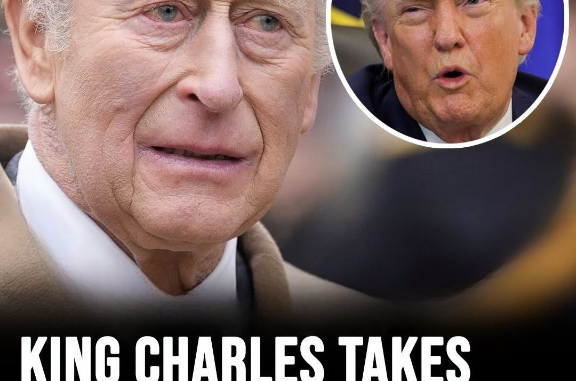
The historic corridors of Buckingham Palace have long been associated with careful diplomacy and measured restraint. Yet a recent speech by King Charles III has ignited widespread debate, with some commentators suggesting the monarch may have delivered one of his most politically charged messages to date. The occasion was deeply symbolic: a tribute marking what would have been the 100th birthday of his mother, Queen Elizabeth II. While many expected a heartfelt reflection on the late Queen’s extraordinary reign, some observers believe the address carried a broader message about the current state of global affairs—and perhaps even an indirect critique of modern political movements linked to Donald Trump.
The King began by honoring his mother’s remarkable legacy. He spoke about her unwavering commitment to public service, her calm leadership during periods of uncertainty, and her unique ability to unite people from different backgrounds and generations. His remarks painted a portrait of a monarch whose presence provided continuity and reassurance for decades.
However, the tone appeared to shift when he moved from reflecting on the past to discussing the challenges of the present day. One particular remark quickly attracted attention. Charles suggested that the world as it exists today might have caused his mother significant concern.
To many listeners, the statement sounded like a simple observation about the rapid changes shaping modern society. Yet royal analysts noted that members of the monarchy rarely choose their words casually. Because the Crown is expected to remain politically neutral, even subtle comments can generate intense scrutiny and speculation.
Several commentators argued that the King’s remarks could be interpreted as expressing concern about growing political divisions, changing international alliances, and rising populist movements across the Western world. Given the prominence of Donald Trump within many of these debates, some observers quickly connected the speech to broader conversations surrounding American politics.
The timing of the address added another layer of intrigue. The comments came as preparations were underway for important diplomatic engagements between Britain and the United States. With upcoming meetings involving senior American leaders, some analysts viewed the speech as a carefully crafted signal about the values and principles the King believes should guide international relationships.
For years, the relationship between the British monarchy and Donald Trump has attracted public attention. While Trump often expressed admiration for Queen Elizabeth II, his political positions frequently differed from causes long supported by King Charles, particularly on environmental issues and international cooperation. As a result, some commentators interpreted the King’s tribute as a subtle defense of the ideals associated with his mother’s reign—stability, diplomacy, and institutional continuity.
Not everyone agrees with that interpretation. Critics argue that the speech was simply a personal reflection from a son honoring his late mother. They point out that references to modern challenges could just as easily relate to climate concerns, technological disruption, global conflicts, or social polarization rather than any individual politician.
Still, in today’s media environment, every public statement from a head of state is closely analyzed. Ambiguous remarks often become the subject of competing interpretations, especially when they coincide with major political developments.
Beyond the speculation, the King’s central message focused on resilience, continuity, and optimism. Echoing themes often associated with Queen Elizabeth II, he emphasized the importance of remaining steady during uncertain times and preserving the institutions that provide stability for future generations.
At the same time, by acknowledging the difficulties of the present era, he created a contrast that many found striking. His words appeared to invite reflection on whether contemporary leadership is living up to the standards of responsibility, dignity, and service that his mother represented throughout her reign.
As discussion surrounding the speech continues, Buckingham Palace has declined to provide further clarification. That silence has only fueled additional debate, allowing observers to draw their own conclusions about the King’s intentions.
Whether the remarks were intended as a subtle commentary on specific political developments or simply a broader reflection on a changing world, the speech demonstrated the enduring influence of the monarchy’s voice. With only a few carefully chosen words, King Charles managed to spark an international conversation.
As future meetings between Britain and the United States approach, attention will remain focused on every public appearance and diplomatic interaction. For many observers, the episode serves as a reminder that in modern politics, a carefully delivered sentence from a monarch can generate just as much discussion as a speech from any elected leader.
Whatever the true meaning behind the King’s comments, one thing is clear: Queen Elizabeth II’s legacy continues to shape public debate, and her son’s words have ensured that conversation remains very much alive.
Leave a Reply