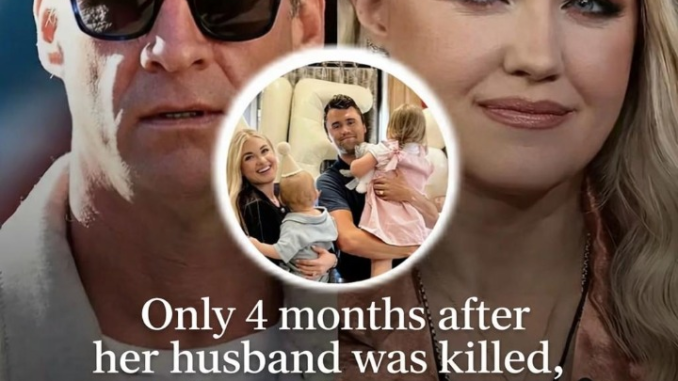
Just four months after the heartbreaking death of her husband, Erika Kirk is once again in the public eye—this time for a personal matter. Reports that she has begun a new romantic relationship have sparked widespread discussion online, drawing reactions ranging from sympathy and support to criticism and debate.
The loss of her husband was sudden and devastating, prompting an outpouring of condolences and media attention. In the months that followed, Kirk largely stayed out of the spotlight, focusing on her family and adjusting to life after tragedy.
Recent reports and photos suggesting she has entered a new relationship have reignited interest in her private life. While some see this as a natural step in the healing process, others have questioned the timing, prompting broader conversations about grief, recovery, and societal expectations for widows.
Experts note that mourning is deeply personal and doesn’t follow a universal timeline. For some, forming new emotional connections can be part of coping and healing, rather than a sign of forgetting a loved one. Supporters of Kirk emphasize this, arguing that moving forward emotionally does not diminish the love she had for her late husband or the significance of her loss.
Critics, however, feel the relationship may be premature and question whether public figures should consider public perception more carefully. This reflects a wider societal double standard, as widows often face stricter scrutiny than widowers when rebuilding their personal lives.
The presence of children adds another layer. Advocates point out that healthy, supportive relationships can provide stability and security for children rather than disruption.
Kirk herself has not publicly commented, likely to maintain privacy during an emotionally intense time. Her choice to remain silent underscores the importance of boundaries, particularly in an era where personal lives are constantly examined online.
Ultimately, Erika Kirk’s situation highlights how quickly private grief can become public debate. It raises important questions about empathy, judgment, and the right to pursue personal happiness after loss. Her story is not just about a new romance—it’s about survival, healing, and the human need for connection after profound tragedy.
Leave a Reply