Grief has a way of settling into the quiet corners of your life until you almost forget what things felt like before. I was just beginning to breathe again when one photo pulled me back into something I couldn’t explain.
My daughter, Emma, was only six when she died in a car accident. My husband, Mark, had been driving her to a school event when another car ran a red light and struck them. Emma didn’t survive. Mark did—and I never fully understood how.
The grief never really left. It became part of everything. Mark coped by throwing himself into work, while I carried the silence. Eventually, we stopped saying Emma’s name because it hurt too much.
Ten years passed like that.
One evening, I finally said what had been on my heart: I still wanted to be a mother. Mark agreed, and for the first time in years, we had a real conversation. We decided to look into adoption, and I felt something I hadn’t felt in a long time—hope.
The next day, while Mark was at work, I couldn’t wait. I opened an adoption website and started scrolling through profiles.
Then I saw her.
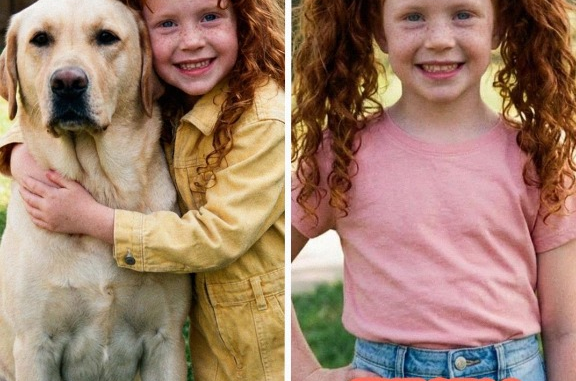
The girl looked just like Emma—same red curls, freckles, blue eyes. My heart stopped. It didn’t seem possible. Even though her name and details were different, the resemblance was undeniable. I immediately reached out to arrange a meeting.
When I showed Mark the photo, he brushed it off, insisting it was just a coincidence. But his reaction felt off—too quick, too dismissive. I knew I couldn’t ignore it.
The next day, I went to the orphanage on my own. When I showed the director the photo, her expression changed instantly. She admitted there was something I needed to know and arranged for me to come back and speak with someone who could explain everything.
That night, Mark reacted angrily when I told him. He didn’t want me to go back, which only made me more certain that something wasn’t right.
The following day, I returned and met a young man who revealed a disturbing truth. A sperm bank connected to the orphanage had been involved in a scandal. One donor—someone with red hair, freckles, and blue eyes—had been used far more than anyone realized, resulting in many children who all shared the same appearance.
As I listened, a realization began to take shape—one I didn’t want to believe.
I left in a daze, but somehow found myself outside Mark’s office. Deep down, I already knew what I was about to uncover.
When I confronted him, I asked the question that had been building inside me: why had he been donating sperm?
At first, he denied it. Then he broke.
He admitted he had been doing it for years, driven by grief. He couldn’t let Emma go and thought that by putting something of himself into the world, he might see a piece of her again. It wasn’t just that—he had also become involved with the owner of the facility, who had encouraged it.
I was stunned. What he called grief felt more like obsession. Instead of healing together, he had hidden the truth, betrayed me, and created a situation that affected countless lives.
In that moment, something inside me shifted. I realized I couldn’t stay.
I walked out of his office, got into my car, and made a call to begin the divorce process.
For the first time in ten years, I wasn’t holding onto the past anymore.
I was finally choosing myself.
Leave a Reply