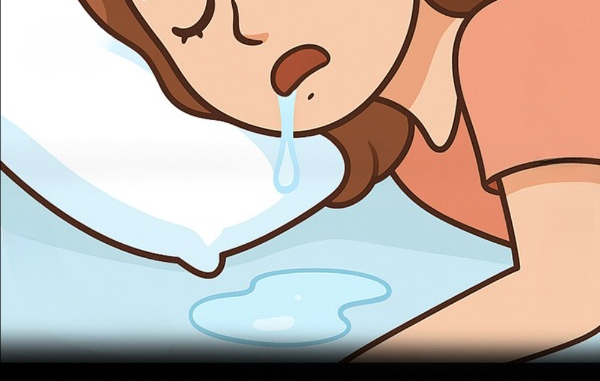
Some sleep habits can reveal more than people expect. Small nighttime behaviors—like drooling, sleep talking, hogging blankets, curling up tightly, grinding teeth, or tossing and turning—can sometimes reflect emotional patterns, stress levels, and how the mind seeks comfort and rest.
These habits are not formal psychological tests, but researchers have noted that sleep behavior can occasionally mirror how a person processes emotions in waking life.
Drooling during sleep: deeply relaxed and emotionally open
Drooling usually happens when the body reaches a very deep state of rest. People who experience it are often emotionally drained but naturally sincere and open.
They tend to:
- Trust others easily
- Feel emotions strongly
- Value comfort and emotional safety
- Be more affectionate than they appear
- Suppress stress during the day and release it at night
Often, these individuals are high-functioning or perfectionistic while awake, and sleep is when their body finally fully relaxes.
Sleep talking: an active, restless mind
People who talk in their sleep often have busy mental activity even while resting. Their thoughts may continue processing emotions, conversations, or ideas.
They are often:
- Creative
- Emotionally expressive
- Prone to overthinking
- Socially engaged
- Mentally active even during rest
Sleep talking can increase during stressful periods when the brain is still working through unresolved thoughts.
Sleeping curled up: sensitivity and self-protection
Those who sleep in a curled or fetal position are often emotionally sensitive and value comfort and safety.
This posture is commonly linked to:
- Introversion
- Emotional sensitivity
- A need for security
- Quiet anxiety
- Deep loyalty in relationships
It can reflect a natural instinct for emotional protection.
Blanket hogging: comfort and control
People who pull the blanket toward themselves at night are not necessarily selfish—it can simply reflect comfort needs.
They often:
- Prefer control over their environment
- Seek physical and emotional security
- Have strong personalities
- Dislike vulnerability
- Naturally take charge in daily life
Sometimes it’s just temperature or restlessness, but it can also reflect a subconscious need for reassurance.
Teeth grinding: stress and internal pressure
Bruxism, or grinding teeth during sleep, is often linked to emotional tension.
It is commonly seen in people who are:
- Highly responsible
- Driven and ambitious
- Emotionally restrained
- Under ongoing stress
- Prone to internalized frustration
The body often releases built-up pressure during sleep.
Sleeping spread out: confidence and independence
People who take up space while sleeping are often comfortable with themselves and expressive in nature.
They tend to be:
- Independent
- Confident
- Optimistic
- Energetic
- Unconcerned with others’ opinions
They often value freedom and direct communication.
Constant movement in sleep: restless energy
Frequent tossing, turning, or kicking can indicate an overactive or unsettled mind.
This may be associated with:
- Anxiety
- High energy levels
- Emotional overload
- Ambition and drive
- Difficulty fully relaxing
The mind continues processing thoughts even during rest.
One foot outside the blanket: balance and flexibility
People who sleep with one foot exposed are sometimes described as balancing comfort with independence.
They often:
- Adapt easily
- Value personal space
- Stay emotionally flexible
- Prefer freedom over restriction
- Dislike feeling confined
The bigger picture
Most sleep habits are shaped by physical conditions, stress, temperature, and sleep quality rather than personality alone. However, they can still hint at emotional states or inner tension.
Sleep is when people stop consciously controlling their behavior, so natural instincts often show through. What may seem unusual or funny can actually reflect relaxation, stress, emotional needs, or comfort-seeking behavior.
In the end, sleep habits are less about defining personality and more about revealing how the body and mind unwind when no one is watching.
Leave a Reply