
He was a quiet, reserved boy growing up in a small town—well-mannered, seemingly ordinary, delivering newspapers and participating in the Scouts.
It’s difficult to reconcile that innocent-looking child with the man he would later become, one of the most infamous criminals in American history.
Even those who knew him as a child struggled to believe it.
A complicated beginning
Born in 1946 in Burlington, Vermont, his early life was marked by uncertainty and instability. He was born out of wedlock in a home for unwed mothers, and his father was never identified. After two months, he was placed with his grandparents in Philadelphia.
His mother, Louise, reportedly considered adoption, but her father insisted the child remain within the family. As a result, he grew up believing his mother was his sister.
Some accounts suggest he discovered the truth early on, later recalling that he realized the age gap between them didn’t make sense and that Louise always behaved more like a mother than a sibling.
In later years, he described piecing together his origins gradually, eventually accepting that she was his mother. Other versions of his story suggest he may have learned the truth through a birth certificate or a confrontation during his youth, though the exact moment remains unclear and disputed.
Early behavior and mixed impressions
He spent much of his childhood in a stable-seeming household with his grandparents, whom he believed were his parents. Neighbors described the family as pleasant, and he appeared to get along well with friends and siblings.
However, some unsettling incidents were later recalled. In one case, an aunt reportedly woke to find knives placed beside her bed by a young child. She later said she was the only one who found it disturbing at the time.
At the same time, many aspects of his youth appeared normal. He played with friends, joined the Scouts, and showed interest in sports and girls.
Yet not everyone saw a carefree childhood. He was teased for a speech difficulty, struggled socially in some settings, and faced rejection in school sports. A disciplinary incident with a teacher left him resentful, and by high school he had become more withdrawn, with very few social or romantic experiences.
Growing tension and inner change
As he got older, family tensions increased, especially after his mother began a relationship with a new partner. Conflicts arose over discipline, expectations, and financial limitations. He reportedly longed for a more glamorous life and became increasingly frustrated with his circumstances.
In adulthood, he attended college and even worked in a suicide prevention hotline, presenting himself as capable and composed. But behind that image, a disturbing pattern of behavior was beginning to form.
A hidden double life
Over time, he began targeting young women using deception and manipulation, often posing as injured or in authority to gain trust. Once victims let their guard down, he would lure them away before attacking them in isolated locations. Some survived through chance or resistance, while others did not.
Investigators later identified a consistent pattern in his crimes: approach, deceive, abduct, and disappear.
Capture and identity revealed
His crimes ended in 1975 when a routine traffic stop led police to search his vehicle and uncover suspicious items. A license check revealed his identity: Theodore Robert Bundy.
He would later be known as Ted Bundy.
Bundy ultimately admitted to multiple murders across several states during the 1970s, though the exact number of victims remains unknown. He was convicted in several cases, while many others were suspected but never proven.
His methods were calculated and manipulative, often involving charm, impersonation, and deception before turning violent. His victims were primarily young women, many of them students.
Trial, conviction, and execution
Bundy received multiple death sentences following trials in Florida. Public reaction to his crimes and sentencing was intense, with widespread media attention and strong emotional responses from the public.
After years of appeals, his execution was carried out in 1989 at Florida State Prison. He declined a special final meal and instead received a standard prison meal.
In his final moments, he offered a brief message to loved ones, expressing a simple farewell.
Outside the prison, reactions ranged from celebration to reflection, as people marked the end of a case that had gripped the nation for years.
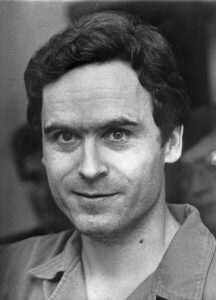
A legacy of manipulation and unanswered questions
In later reflections, investigators and those who studied him described a man who often spoke about control rather than emotion, presenting a calm exterior even in the face of overwhelming evidence.
Though his life ended, the questions surrounding his psychology, motives, and the true extent of his crimes continue to be discussed and studied.
Leave a Reply