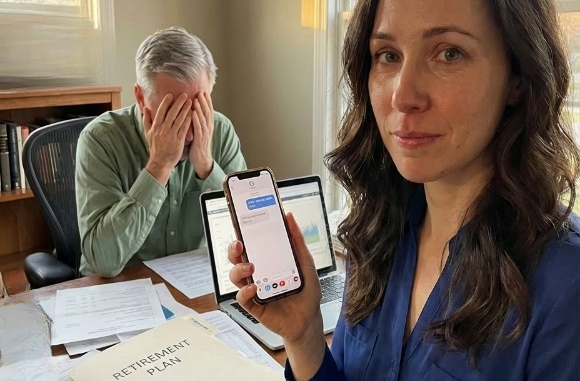
My father disowned me over text the day before my graduation because I refused to invite his new wife’s children. My mother, my brother, and three aunts all took his side. I spent ten years completely cut off from him—until the day he suddenly needed my signature on a document that changed everything. I answered with just four words… and what followed unraveled his entire retirement plan.
My phone started ringing at 6:14 a.m. while I was pouring coffee. By the fourth call, I knew it wasn’t casual—it was urgent or desperate.
It was my father.
I let it go to voicemail.
Seconds later, a message appeared:
I need your signature today. Call me NOW.
Ten years. A full decade since his final message the night before my graduation: If those girls aren’t invited, neither am I. And if you go through with this, don’t call me your father again.
He hadn’t just cut me off—he made sure others followed. My mother, my brother, even extended family. I crossed that graduation stage alone.
And now he wanted something.
I stared at the message and replied:
Not without full disclosure.
The typing dots appeared instantly. Disappeared. Returned again.
Then he called.
“Emily,” he said sharply, though his voice sounded strained. “This isn’t the time for games.”
“That’s ironic,” I said. “That’s exactly what I was told the day before graduation.”
“I need you to sign a transfer affidavit. There’s a closing today.”
“For what?”
A pause.
“Your grandfather’s property.”
My grip tightened. I had always been told that land outside Tulsa had been sold years ago to cover debts. That was the story I’d lived with for a decade.
“You told me there was nothing left,” I said.
“I said I’d explain,” he replied. “But if this isn’t signed within hours, everything collapses.”
“Then explain.”
Silence stretched.
Then, quietly, “Because if you don’t sign, it comes out that I never legally owned all of it.”
Before I could respond, someone in the background shouted, “Don’t tell her that—” and the call ended.
A text came immediately from an unknown number:
Don’t sign anything. He’s lying.
Then another:
Check the 2016 probate file. Your name was hidden.
My stomach dropped.
Within the hour, I was at the county records office. The clerk barely reacted when I gave my grandfather’s name—but when she pulled the file, her expression changed.
“There’s an amendment,” she said. “Filed shortly after the original probate.”
She slid it across.
There it was—clear as day. My name. Not hidden, not symbolic. I was an equal heir.
For ten years, I had been told the land was gone. For ten years, I was treated like I had no claim, no right to ask questions. But it had never been fully his to sell.
My phone rang again.
“I’m at probate,” I said when I answered.
Silence.
Then a curse.
“You don’t understand what you’re doing,” he said.
“I understand perfectly. I own half.”
A pause.
Then, “It wasn’t supposed to stay that way.”
His explanation unraveled fast—debts, loans, mineral rights, financial pressure. He framed it as survival.
But something else surfaced in the clerk’s voice while she kept scanning.
“There’s a sealed petition,” she said. “For guardianship.”
“For who?” I asked.
She looked again.
“Your father.”
My breath caught.
Then she added quietly, “Filed by Rachel Mercer.”
His new wife.
Suddenly he was speaking rapidly, warning me not to trust her, claiming she was trying to seize control of everything.
But the clerk found something else.
A fraud allegation. A claim that he was not competent to manage his finances.
And suddenly, the situation wasn’t just about inheritance—it was about control, money, and competing betrayals.
He told me to meet him at an old property office.
Against my better judgment, I went.
Outside the building: his truck—and a police car.
Inside: chaos.
Files spread out. Deeds. A tense room with my father, his wife Rachel, a banker, and an officer.
And the truth finally surfaced piece by piece:
The land was never fully sold.
It had been leveraged.
My ownership had been intentionally excluded from financial disclosures.
My mother had even played a role in suppressing it years earlier.
And now competing sides were trying to control what was left before everything collapsed.
The affidavit he wanted me to sign wasn’t just a transfer—it was a legal statement that erased my claim and shifted liability away from him.
I refused.
Not without full disclosure.
Rachel instead pushed a legitimate legal route—one that froze the sale and exposed the hidden transfers.
I signed that.
And that was the moment everything broke open.
By the end of the day, his plan collapsed. Lenders moved in. The estate froze. The truth could no longer be buried or rewritten.
My mother called in panic. My brother sent a stunned message. The same people who once accepted cutting me off were now watching the consequences unfold.
Months later, a court confirmed it: I was a rightful heir. Half the land belonged to me.
But the real shift wasn’t financial.
It was that, for the first time in ten years, the truth couldn’t be rewritten to make me the problem.
And it all began with four words.
Leave a Reply