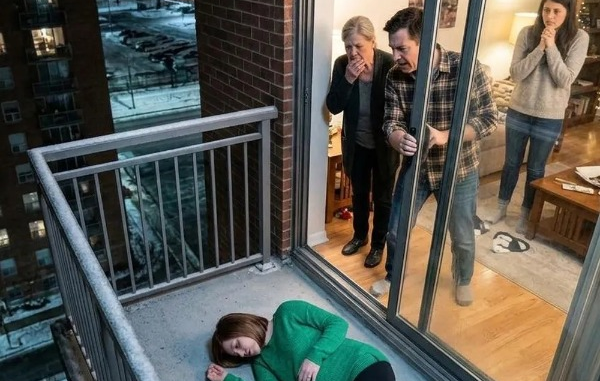
I was twenty-eight weeks pregnant when what should have been a normal family gathering turned into the most terrifying night of my life. My sister-in-law, Melissa, had spent months criticizing my pregnancy—calling me dramatic whenever I felt tired, dismissing my discomfort, and accusing me of being overly sensitive. My husband, Ryan, usually brushed it off as “just how she is.” But that night, her behavior went far beyond anything before. When I stepped onto the balcony to grab some drinks, she shut the door behind me, locked it, and stared at me through the glass. With a chilling smile, she said, “Maybe a little discomfort will toughen you up.” At first, I thought it was a harsh joke that would end quickly—but she walked away, leaving me alone in the freezing cold.
As time passed, confusion turned into fear. The icy wind cut through my sweater, my hands went numb from banging on the glass, and my body started shaking uncontrollably. Soon, painful cramps spread through my abdomen, and panic set in as I realized Melissa knew exactly what she was doing—and chose not to help. Inside, the gathering went on, warm and unaware, while I struggled just outside. By the time Ryan’s mother spotted me collapsed against the railing and called for help, I could barely stand. Ryan rushed to me as I stumbled back inside, and in the chaos, I looked down and saw blood on my clothes. Moments later, I was in an ambulance, terrified and praying my baby would be okay.
At the hospital, doctors moved quickly, attaching monitors and administering medication as the words I feared most filled the room: preterm labor. Ryan stayed beside me the entire time, but something in him had shifted. For the first time, he didn’t see his sister’s behavior as teasing or harmless—he saw it for what it was: cruel and dangerous. When Melissa arrived, trying to claim she “didn’t think it would go that far,” Ryan confronted her and told her she was no longer welcome in our lives. His parents, who had long excused her actions, stood silent. No one defended her this time—the reality was too serious to ignore.
Our daughter was born six weeks early—tiny but strong—and after a short stay in the NICU, we were finally able to bring her home. Holding her, I made a promise: no one who put my child at risk would ever be allowed near her again. Melissa sent apologies and gifts, but some actions can’t be undone with regret. What happened taught us a painful but important lesson—being family doesn’t excuse harmful behavior, and protecting your peace isn’t wrong. Sometimes, the strongest form of love is setting firm boundaries to keep the people you care about safe.
Leave a Reply