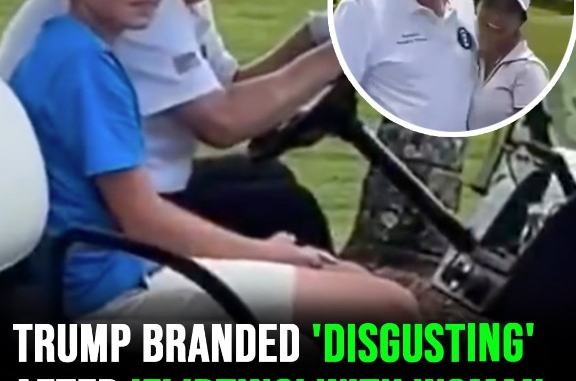
In a time when people have grown used to unpredictable leadership, certain moments still manage to capture widespread attention and spark intense debate. Recently, what seemed like an ordinary day on a luxury golf course turned into a viral controversy, dividing public opinion and leaving many critics stunned. At the center of it all is a widely shared video of Donald Trump, showing a moment that some viewers interpret as a revealing glimpse into his character rather than a formal political setting.
The clip, reportedly filmed by a bystander, shows Trump sitting in a golf cart—something not unusual given his well-known interest in the sport. What drew attention, however, was the context. Sitting beside him was his teenage grandson, while a passing woman became the subject of remarks that many viewers described as inappropriate. The situation escalated when Trump called her over for a photo, which added to the criticism from those who saw the interaction as disrespectful.
Online reaction was immediate and intense. The video spread quickly across social media, with many users expressing outrage and labeling the behavior as embarrassing or unacceptable. For critics, this wasn’t seen as an isolated moment but rather part of a broader pattern, raising concerns about judgment, especially given his public role and influence on younger generations.
The timing of the video also fueled the backlash. With ongoing economic and global challenges, some people viewed the setting—a high-end golf course—as symbolic of disconnect. Combined with the perceived tone of the interaction, it led to broader discussions about expectations for public figures and the example they set, particularly in front of family members and the public.
Trump’s long association with golf has often drawn both attention and criticism. Stories about his competitiveness on the course have circulated for years, with supporters framing it as determination, while critics see it as reflective of a larger mindset. For some, the golf course has become a setting where his personality appears less filtered.
Supporters, however, were quick to defend him, arguing the moment was harmless and exaggerated. They described it as casual behavior taken out of context and part of his unfiltered personality—something they believe sets him apart from more traditional politicians. To them, the backlash reflects a tendency to overreact to informal moments.
Others strongly disagree, emphasizing that authenticity should not come at the expense of respect. Commentators and experts have pointed out the potential influence such behavior can have, especially on younger viewers, arguing that public figures carry a responsibility to model appropriate conduct regardless of the setting.
As the story continues to circulate, the video is likely to become another defining moment in the public narrative surrounding Trump. Whether it will have a lasting impact remains uncertain, but it clearly highlights ongoing cultural divisions. For some, it reinforces existing concerns; for others, it is dismissed as overblown criticism.
Ultimately, the incident goes beyond a single viral clip. It reflects deeper questions about leadership, public behavior, and the standards people expect from those in positions of influence. As opinions continue to clash, the moment serves as a reminder of how differently the same event can be interpreted—and how those interpretations shape broader conversations about society and values.
Leave a Reply