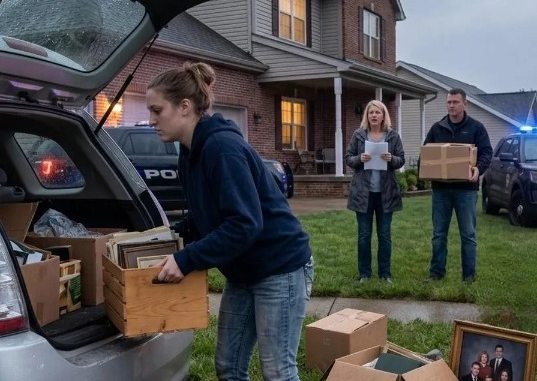
When the sheriff’s deputies arrived at my front yard, my mother was already throwing my things onto the grass while telling the neighbors I had refused to leave the “family home.” She was convinced she had finally pushed me out so my younger sister and her family could move in. What she didn’t realize was that my late father had quietly signed the house over to me before he died. So while she tried to publicly shame me, the legal owner of the property was standing calmly in the driveway, watching in silence. The humiliation she planned for me ended up turning back on her.
The day before, my mother had given me twenty-four hours to leave, insisting the house belonged to the family now and that my sister needed it more. For years, I had been the one holding everything together—the daughter who moved back in when my father got sick, the one who managed his care, paid bills, handled repairs, and kept up with the mortgage while everyone else stayed distant. My mother and sister treated all of it as if it were simply my responsibility, not something worth appreciating. What they never realized was that my father had seen everything. Months before his death, he took me to his lawyer and arranged for the house to be transferred to me, saying clearly that a home belongs to the person who maintains it, not those who only show up when it’s convenient. He told me to keep it private unless it became absolutely necessary to reveal it.
So when my mother showed up with a moving truck, along with my sister and her husband, I allowed them to proceed. They entered without permission, packed up my belongings, and acted as though they already owned the place. Meanwhile, I quietly documented everything and contacted my father’s attorney. Not long after, the lawyer arrived with deputies and the official deed and paperwork confirming ownership. When the deputy declared that I was the legal owner, my mother’s confidence collapsed. My sister protested and my mother insisted there must have been a mistake, but the documents were undeniable. The deputies ordered them to leave immediately and supervised as they loaded everything back into the truck, all while stunned neighbors looked on. The crowd they had gathered to witness my humiliation instead saw their own.
After they were gone, I stood alone in the house my father had protected for me and fully understood the meaning of what he had done. He hadn’t just left me a property—he had left me validation that my years of effort, loyalty, and sacrifice had value. In the weeks that followed, I repaired the damage, changed the locks, and brought peace back into every room they had tried to take from me. For the first time, I stopped seeing myself as the family’s fallback option and started recognizing myself as someone deserving of respect, boundaries, and ownership over my own life. My father’s final gift wasn’t just the house—it was the certainty that love should never come at the cost of dignity, and that sometimes the people who quietly stand beside you understand your worth better than anyone else ever could.
Leave a Reply