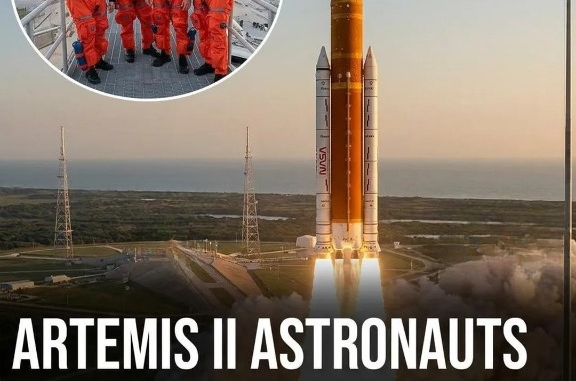
On April 1, 2026, NASA’s Artemis II mission launched from Kennedy Space Center, marking a major step back into human exploration of the Moon after more than 50 years. Onboard the Orion spacecraft were four astronauts—Reid Wiseman, Victor Glover, Christina Koch, and Jeremy Hansen of the Canadian Space Agency—embarking on a 10-day journey around the Moon. The launch went off without issues and drew worldwide attention as a landmark moment in both space exploration and global cooperation.
Shortly after reaching orbit, however, the crew ran into an unexpected but noteworthy technical problem involving the spacecraft’s sanitation system. While it might seem minor compared to other aspects of spaceflight, these systems are critical for crew well-being and mission continuity, particularly on longer missions. Understanding this, the astronauts quickly alerted mission control so the issue could be managed before becoming more disruptive.
NASA engineers responded immediately, collaborating closely with the crew to troubleshoot the problem in real time. Although the sanitation system was designed to be more advanced and user-friendly than those of earlier missions, operating it in space still required precision and care. Guided by teams on the ground, the astronauts worked through the issue step by step, demonstrating their training and flexibility under pressure.
Thanks to their coordination and preparation, the problem was resolved efficiently without impacting the mission’s overall timeline. Christina Koch played a significant role in carrying out the fix, helping restore the system to full functionality. The incident underscored the importance of communication and problem-solving in space, where even small challenges demand careful attention. With the issue behind them, the Artemis II crew continued their mission, advancing a new era of human exploration beyond Earth.
Leave a Reply