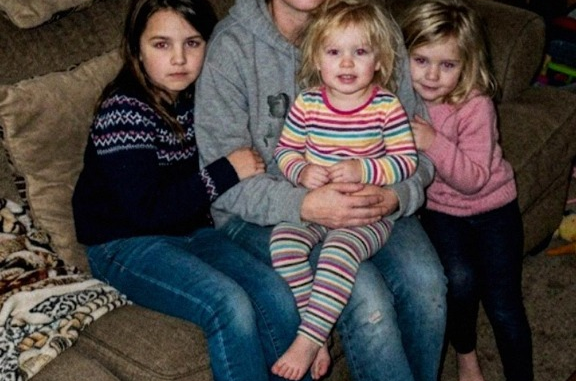
I became a parent to my nieces overnight—no warning, no plan for what came next. Just when life finally felt stable, the past returned in a way I couldn’t ignore.
Fifteen years ago, my brother Edwin stood at his wife’s grave… and then disappeared before the flowers had even settled. No explanation. No goodbye.
He left behind three little girls—three, five, and eight—who arrived at my door with a social worker and a single overpacked suitcase.
That first night, the house felt unbearably quiet. The kind of silence that presses on your chest.
The youngest, Dora, kept asking when her mother would come home. Jenny, the oldest, cried for a week—then stopped mentioning it entirely. Lyra refused to unpack her clothes, saying she didn’t want to get too comfortable.
I kept telling myself Edwin would come back. That something must’ve happened—because no one just walks away from their children after losing their wife so suddenly.
But days turned into months, and months into years.
There were no calls. No letters. Nothing.
Eventually, I stopped waiting.
By then, I was already in it—packing lunches, attending school events, learning how each of them liked their breakfast. I stayed up through fevers, nightmares, heartbreaks, and milestones.
Without realizing exactly when it happened, they stopped being “my brother’s daughters.”
They became mine.
Then, last week, everything shifted.
There was a knock at the door.
I almost ignored it—we weren’t expecting anyone. But when I opened it, I knew instantly.
It was Edwin.
Older, thinner, worn down—but unmistakably him.
The girls were in the kitchen behind me, unaware of who stood at the door.
He looked at me like he wasn’t sure how I’d react.
“Hi, Sarah,” he said.
After fifteen years… that was all.
“You don’t get to act like nothing happened,” I told him.
He didn’t argue. Didn’t explain. Didn’t even ask to come inside.
Instead, he handed me a sealed envelope.
“Not in front of them,” he said quietly.
That was it.
I stepped outside, closed the door, and opened it.
The letter inside was dated fifteen years ago.
As I read, everything began to shift.
After his wife died, things hadn’t just fallen apart emotionally—they’d collapsed financially. Hidden debts, unpaid bills, unstable accounts. What he thought was security turned out to be nothing.
He panicked.
He believed that staying would drag his daughters into instability, so he made what he thought was the only choice—leaving them with me, someone steady, someone who could give them a chance at a normal life.
It didn’t make it right.
But it made it clearer.
Along with the letter were documents—recent ones.
Accounts closed. Debts cleared. Assets recovered.
Everything had been rebuilt… and transferred into the girls’ names.
“I fixed it,” he said.
I stared at him.
“All of it?”
He nodded. “It just took time.”
I folded the papers slowly.
“You don’t get to hand me this and think it makes up for fifteen years.”
“I know,” he said.
That made it harder—not easier.
“Why didn’t you trust me?” I asked. “Why didn’t you let me stand with you?”
He had no answer.
And that silence said everything.
Inside, one of the girls called my name. I told him this wasn’t over, then went back in—with the envelope still in my hands.
For the first time in years, I didn’t know what came next.
I gathered the girls and told them the truth.
They listened quietly as I explained everything—the letter, the debts, his decision, and what he had done since.
When I showed them the documents, the reality sank in.
Everything had been cleared.
Everything was now theirs.
But Jenny said what all of us were thinking:
“Why didn’t he come back sooner?”
I didn’t have an answer.
Lyra decided we should call him.
Fifteen minutes later, he was standing in our living room.
The girls faced him—no hugs, no tears, just questions.
Why did you leave?
Did you think we wouldn’t notice?
Are you staying this time?
He didn’t make excuses.
“I thought you’d be better off,” he said. “I know now I was wrong. I’m sorry.”
He admitted he missed everything.
And he had.
But when Dora asked if he was staying, he answered:
“If you’ll let me.”
That night, we sat down for dinner together.
It wasn’t warm or easy—but it wasn’t distant either.
It was something new. Something uncertain.
Later, I stepped outside where he stood on the porch.
“You’re not off the hook,” I told him.
“I know,” he said.
“They’ll have questions.”
“I’m ready.”
That night felt different.
Not because everything was fixed—but because everything was finally out in the open.
No more guessing. No more silence.
Just the question of what comes next.
And for the first time in a long time, we’d be figuring it out together.
Leave a Reply