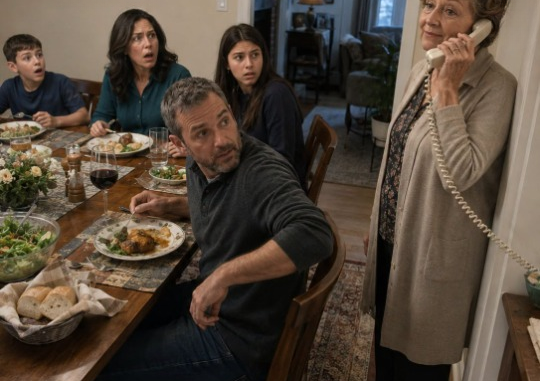
The beef stew was still steaming when my daughter-in-law, Linda, pointed toward the back door and told me to finish my meal outside.
“I’m running this house now,” she declared, while my son Edward sat quietly and avoided my eyes.
At 68, I was sitting in the Chicago home that my late husband, Anthony, and I had spent three decades paying off on modest teachers’ salaries. We skipped vacations, stretched every dollar, and celebrated our final mortgage payment with a simple grocery-store cake because that was all we could afford.
When Edward lost his job, I welcomed him, Linda, and their son Dylan into my home rent-free without a second thought. Yet before long, Linda complained about the guest room and even suggested she and Edward should move into my bedroom. Still, it wasn’t until she ordered me out of my own dining room—and Edward remained silent—that I realized how much my patience had allowed.
At exactly 6:48 p.m., I stood up, walked to the old wall phone, and called Gabriella Reyes, the attorney who had handled Anthony’s estate.
Three years earlier, Gabriella had helped me prepare an occupancy agreement stating that any relatives living in my home were guests, not owners or permanent tenants, and could not alter living arrangements without my written permission. I had filed it away with Anthony’s insurance papers, never imagining I would need it.
“Gabriella,” I said as Linda watched from across the table, “it’s time.”
Edward finally looked concerned. Linda’s confidence faded the moment she realized I wasn’t calling to vent about dinner—I was contacting the person who could legally reinforce my boundaries.
Two days later, Gabriella delivered the formal agreement. It clearly stated that I retained complete authority over the property, finances, bedrooms, and all household arrangements. The deed and mortgage records were already solely in my name, but I also reviewed my insurance policies, investments, and estate plans to prevent any future misunderstandings.
Edward signed immediately. Linda took three days before finally adding her signature.
After that, she stopped reorganizing closets and stopped making decisions as though the house belonged to her. She finally understood that kindness and ownership are not the same thing.
Within two months, Edward found a new job and gave me an envelope containing rent from his first paycheck. He admitted he needed to remember that living somewhere comes with responsibilities and that family support should never be taken for granted.
Eight months later, they moved into their own apartment. Dylan hugged me goodbye and asked if Sunday beef stew would still be a tradition. Linda paused on the porch and acknowledged that she had mistaken generosity for entitlement.
Edward and I slowly repaired our relationship, and his apology meant more because it was backed by genuine change. Linda and I never became close friends, but we developed something far more valuable: mutual respect.
I kept the old wall phone even after Gabriella filed away the agreement. It reminds me of the night I stopped waiting for someone else to defend my boundaries and chose to do it myself.
Anthony and I spent years building that home. It was always mine. That difficult dinner simply reminded me that ownership means little unless you’re willing to calmly and confidently say, “This is my home.”
Leave a Reply