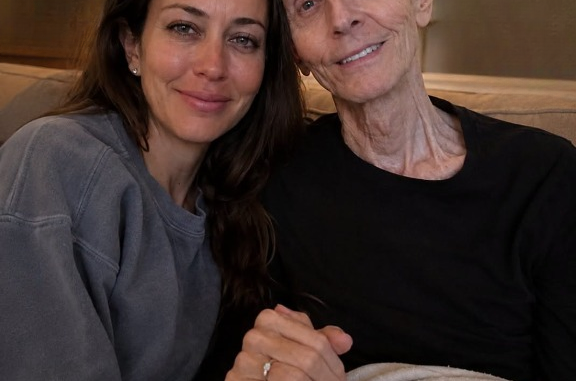
The worn sole of my shoe finally came loose just as three firm knocks echoed through my apartment. I was at the kitchen table with a tube of glue, desperately trying to squeeze a few more months out of my only decent pair, when I opened the door to find an attorney named David standing there in a costly dark suit. Then he told me something that instantly made me forget about the shoe: he was representing my father. I’d been placed in foster care when I was six and had spent most of my life believing my father had simply disappeared. David told me his name was Thomas, that he was extremely wealthy and gravely ill, and that he wanted to see me before he ran out of time. Two days later, I arrived at Thomas’s massive estate, staring up at windows larger than some of the bedrooms I’d slept in as a foster child. Upstairs, the dying man confessed the truth I had always dreaded—he had known exactly what had happened to me.
Thomas had no excuse that could undo the damage. He admitted that after my mother died, he remarried and convinced himself my time in foster care would only be temporary. But while I moved from one home to another, he chose the easier path and built a new life without me. Even so, he asked me to stay for seven days. Against everything inside me, I agreed. Over the course of that week, he shared memories of my mother, recalled small details about my childhood, and gradually became something more complicated than the distant father I had spent decades hating. On the seventh night, he told me that soon I would understand everything. A few hours later, he was dead.
After the funeral, I packed my suitcase, ready to leave for good. But David stopped me and handed me a thick envelope. Then he said six words that left me frozen: “You walked straight into his trap.”
Inside the envelope, I found no fortune, mansion deed, or secret investment account. Instead, there were legal documents revealing that because I had voluntarily remained with Thomas for those seven days, the majority of his estate had been permanently transferred to a charitable foundation supporting young adults aging out of foster care. Thomas’s lawyers had carefully arranged for his insurance policies, properties, and financial assets to fund housing assistance, scholarships, job programs, and transitional services.
I wasn’t inheriting his debt-free mansion, and I wasn’t being dragged into a legal battle over his wealth. Instead, Thomas had reserved a seat for me on the foundation’s board, while making it clear that I could decline it.
Then Caroline, the woman who had introduced herself as Thomas’s “real daughter,” showed me the work being done through the foundation. Eventually, she admitted she wasn’t his biological daughter either. Thomas had fostered her as a teenager and later become her legal guardian. According to Caroline, failing me had haunted him. That regret eventually drove him to spend years helping children who had endured the same kind of abandonment.
Then I spotted a teenage girl sitting at a table, struggling to glue the sole back onto her sneaker.
I sat beside her and showed her how to scrape away the old adhesive before pressing the shoe firmly together. For ten peaceful minutes, neither of us mentioned Thomas, inheritance, or money. And suddenly, I understood what his so-called “trap” had really been.
He hadn’t tried to force me to forgive him. He hadn’t demanded that I accept his money or pretend that my childhood hadn’t been shattered. He had simply made sure I witnessed what his regret had eventually become before I walked away.
Later, Caroline admitted she had resented me because Thomas had spoken about me constantly during his final days. I told her that I couldn’t erase everything he had done just because he had finally changed. Forgiveness wasn’t guaranteed, and I still hadn’t decided whether to accept the board position.
But when I reached the doorway with my suitcase, I stopped. I put it down and asked Caroline what time breakfast would be.
For the first time in my life, staying somewhere wasn’t a choice someone else had made for me.
It was my choice.
Leave a Reply