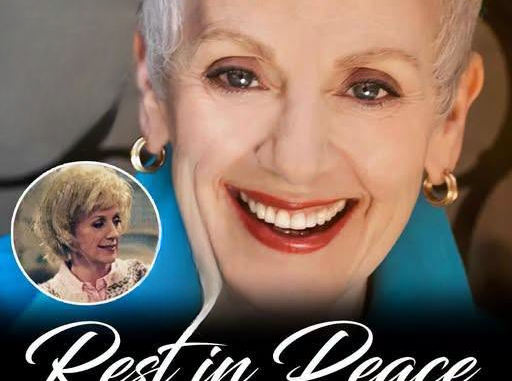
From Television Guest Appearances to Thousands of Stage Performances, Her Influence Extended Far Beyond Hollywood
Jessie Jones built an extraordinary career around something deceptively difficult: making audiences laugh.
She has died at 75, leaving behind a remarkable body of work that reached far beyond television studios and Hollywood. Her career carried her into regional theaters across the country and ultimately onto stages around the world.
Some viewers may remember Jones as a recognizable guest performer from popular television shows.
For generations of theater audiences and performers, however, her importance went much deeper. She became the playwright behind comedies that continued attracting new casts and audiences long after their original productions.
Her creative legacy reached far beyond any one theater.
Her Passion for the Arts Started in Texas
Jones’s journey into entertainment began far away from Hollywood.
She was raised in Texas, where an early school competition gave her a taste of performing and sparked an interest that would eventually shape her entire career.
What began as a childhood experience gradually developed into a lifelong passion.
The performing arts gave Jones an opportunity to combine humor, storytelling and personality in a way that clearly resonated with her.
That early spark eventually led her toward higher education and a professional life centered on performance and theater.
The University of Texas Played a Role in Her Development
Jones continued pursuing her artistic interests at the University of Texas.
Her time there helped prepare her for a career involving acting, theater and storytelling.
Afterward, she moved into professional stage work and began performing for audiences in different parts of the country.
Those early experiences were especially valuable when she later turned toward writing.
She understood theater from the perspective of someone who had actually stood onstage. She knew that words written on a page had to work just as effectively when spoken aloud by actors in front of a live audience.
Her Stage Work Showcased Her Comic Timing
As a performer, Jones became known for her expressive presence and strong comedic instincts.
Her striking blue eyes and ability to convey emotion quickly made her memorable in both dramatic and humorous roles.
Comedy eventually became one of the defining elements of her career.
She understood timing, pacing and the importance of knowing exactly when to pause before delivering a line.
Those skills became particularly useful once she began writing plays, many of which would later become staples of regional and community theater.
Television Introduced Her to a Much Larger Audience
Jones eventually moved into television, where she landed guest appearances on a number of familiar American programs.
Her television credits included Murphy Brown, Night Court, Designing Women, Perfect Strangers and Melrose Place.
Although many of these were guest roles rather than starring positions, Jones had a talent for making an impression in a relatively small amount of screen time.
That is no small accomplishment.
Guest actors often have only a few scenes to establish a character and connect with viewers.
Jones brought enough personality and energy to those appearances that audiences could remember her even after the episode was over.
Murphy Brown Was Only One Chapter of Her Television Career
Her appearance on Murphy Brown placed Jones within one of television’s most recognizable comedy settings.
She also appeared on Night Court and Designing Women, two series celebrated for their distinctive humor, memorable dialogue and ensemble casts.
Perfect Strangers gave her another opportunity to work in television comedy.
Her appearance on Melrose Place showed that she could also adapt to a very different kind of series and tone.
These roles gave her a foothold in Hollywood, but television ultimately represented only a fraction of what she accomplished.
Writing Became One of Her Greatest Contributions
Jones eventually became best known for her work as a playwright.
Writing gave her the opportunity to create complete stories and characters rather than simply portray roles written by someone else.
She developed comedies filled with recognizable personalities, family complications, friendships, disagreements and everyday situations that could quickly spiral into hilarious chaos.
Her plays became especially popular among theaters searching for entertaining productions that audiences could enjoy together.
Because of that appeal, her scripts continued returning to stages again and again.
Collaboration Helped Define Her Theater Career
Jones worked alongside Jamie Wooten and Nicholas Hope, forming a creative partnership that produced numerous successful comedies.
Together, they combined their individual comic sensibilities to create plays that worked well for both performers and audiences.
Their productions developed reputations for being accessible, energetic and enjoyable to perform.
That quality helped the plays spread from one theater company to another, eventually reaching audiences far beyond their original productions.
Dearly Departed Became One of Her Signature Plays
One of the best-known works associated with Jones is Dearly Departed.
The play became an important part of her theatrical legacy and reflected the ensemble-driven comedy that became characteristic of her writing.
Its appeal did not depend on elaborate effects or spectacle.
Instead, the humor came from characters, relationships, dialogue and carefully constructed timing.
That made the play particularly appealing to regional and community theaters.
Actors could bring the characters to life, directors could develop their own interpretations, and audiences could recognize familiar personalities within the comedy.
The Savannah Sipping Society Reached Even More Audiences
The Savannah Sipping Society became another widely recognized work associated with Jones and her collaborators.
Its popularity demonstrated the continued demand for the character-focused comedies she helped create.
The play showed that Jones understood how to write material that was enjoyable not only for audiences but also for the actors performing it.
That distinction matters in live theater.
When performers genuinely enjoy a script, productions are more likely to return to it, giving the work an opportunity to reach new communities.
The Red Velvet Cake War Added to Her Theater Legacy
Another popular title connected to Jones’s career was The Red Velvet Cake War.
The production became part of a larger collection of comedies that audiences embraced in theaters of many different sizes.
Its playful title reflected the lighthearted spirit that characterized much of her writing.
Jones and her collaborators understood how ordinary family conflicts, social situations and everyday misunderstandings could quickly turn into entertaining chaos.
That ability helped make the stories relatable while keeping them funny.
Her Plays Were Performed Thousands of Times
The full scale of Jones’s influence becomes easier to appreciate when considering the number of productions featuring her work.
Her plays were staged thousands of times around the world.
That meant countless actors repeatedly brought her characters and dialogue to life for entirely new audiences.
Every production could offer something different.
Performers brought their own voices, personalities, timing and interpretations to the same scripts while preserving the heart of the comedy.
For a playwright, having work continually performed by new generations is one of the clearest forms of lasting influence.
She Earned Recognition as a Highly Produced Female Playwright
Jones became known as “the most-produced female playwright in America,” a description that reflected the extraordinary reach of her work.
For someone who began her career as an actress and television performer, her success as a playwright represented a remarkable evolution.
She started out interpreting words written by others.
Eventually, she became the writer whose words were being performed by thousands of actors she would never personally know.
That transition greatly expanded the reach of her artistic legacy.
Regional Theater Was Central to Her Lasting Impact
Hollywood often dominates conversations about entertainment careers, but much of Jones’s lasting influence came from outside the major studios.
Regional and community theaters became important platforms for her work.
These theaters bring live performances directly to communities across the country, allowing audiences to experience stories without traveling to Broadway or major metropolitan theater districts.
Jones’s plays became part of that tradition.
Local performers took on her characters.
Local directors shaped the productions.
And audiences continued returning to her work year after year.
Her Comedy Was About More Than Getting a Laugh
The continued popularity of Jones’s plays suggests that she understood something fundamental about comedy: audiences respond most strongly when they can recognize something familiar beneath the humor.
Exaggeration, conflict and misunderstandings can create laughs, but comedy becomes more memorable when the characters still feel authentic.
Jones created stories that allowed people to laugh while recognizing elements of their own families, friendships and communities.
That universality helped her work cross regional and cultural boundaries.
Audiences did not need identical experiences to understand the emotions beneath the jokes.
Her Experience on Stage Strengthened Her Writing
Jones’s background as an actress gave her an important advantage when she began writing for other performers.
She understood how dialogue actually sounds when spoken.
She knew how pacing and pauses could change the impact of a joke.
She also understood that strong characters need more than funny lines.
Actors need motivations, relationships and emotional journeys that make their roles satisfying to perform.
Her experience on both sides of the stage helped shape the comedies that eventually became so widely produced.
Her Career Bridged Multiple Areas of Entertainment
Jones’s professional life never fit neatly into a single category.
She was an actress.
She worked in television.
She performed on stages throughout the country.
And she became a playwright whose scripts eventually reached thousands of productions.
Not every entertainment career successfully crosses so many different creative worlds.
Jones managed to build a life in which performing and writing could complement each other.
Tributes Reflect the Reach of Her Work
Following her death at 75, many tributes have highlighted not only Jones herself but also the happiness her work created for others.
Actors remember playing her characters.
Directors remember staging her productions.
Audiences remember evenings spent laughing in theaters.
Friends and colleagues remember the person who created those opportunities.
The sheer number of people touched by her work demonstrates how far a playwright’s influence can travel, even when that influence is not always visible to the general public.
Her Face May Be Less Familiar Than Her Work
Playwrights occupy an unusual position within entertainment.
People can know and love a play without knowing the writer behind it.
Jones’s television appearances gave her greater visibility than many playwrights receive, but her largest audience may have come from the countless performers who brought her scripts to life.
Someone could attend a local theater production and laugh throughout the evening without realizing that audiences in countless other communities had laughed at those same words.
That quiet but enormous reach is one of the most distinctive parts of her legacy.
Her Stories Can Continue Without Her
A playwright’s death does not erase the characters or stories they created.
The scripts remain available.
Theaters can continue selecting them.
Actors can rehearse them.
Directors can reinterpret them.
And audiences can continue filling seats as the lights go down.
Whenever one of Jones’s comedies returns to the stage, another group of performers gives her writing a new voice.
In that sense, her presence within American theater can continue long after the immediate attention surrounding her death has passed.
A Legacy Built Around Laughter
Jessie Jones’s journey began in Texas, where a school competition first introduced her to the performing arts.
That early experience eventually led her to the University of Texas, professional theater and television appearances on several recognizable programs.
But her transition into playwriting ultimately expanded her influence far beyond acting.
Working with Jamie Wooten and Nicholas Hope, she helped create productions such as Dearly Departed, The Savannah Sipping Society and The Red Velvet Cake War.
Those plays went on to appear in thousands of productions.
Jones may be gone at 75, but her most important legacy remains remarkably alive.
Somewhere, actors will continue rehearsing her dialogue.
Somewhere, a director will call for another take during rehearsal.
And somewhere, an audience will sit together in a dark theater, waiting for the next laugh from a line Jessie Jones wrote years ago.
For someone who spent so much of her life creating laughter and bringing people together through performance, there may be no more fitting legacy than that.
Leave a Reply