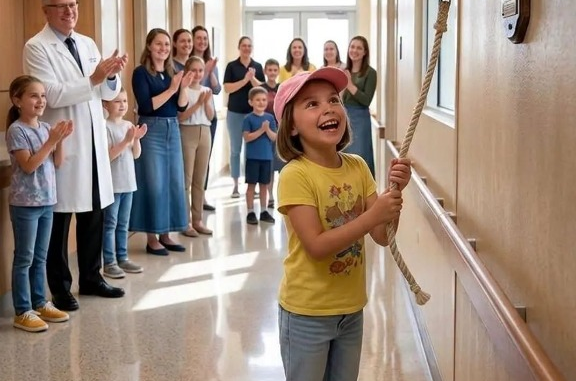
The pediatric oncology wing filled with applause as my 10-year-old daughter, Martha, rang the bell marking the end of her chemotherapy. Nurses smiled, families clapped through tears, and Martha proudly lifted her glitter-covered certificate above her head. “We did it, Mom!” she laughed, her freckled face glowing with excitement beneath the brass bell. Two years earlier, a series of unexplained bruises had led to a leukemia diagnosis that turned our lives upside down. Since then, our days had revolved around hospital visits, blood tests, chemotherapy, and endless uncertainty. As a single mother, I fought with insurance companies, kept track of every prescription, and saved my tears for quiet moments when Martha couldn’t see them. That afternoon, though, I finally believed we were leaving the hardest chapter behind. Holding balloons in one hand and mine in the other, Martha smiled toward the hospital doors and whispered, “Let’s go home.”
We had almost reached the exit when Dr. Collins hurried after us, calling my name. Out of breath and visibly emotional, he stopped in front of us and said, “There’s something I need to tell you. I couldn’t say anything while Martha was in treatment, but I can’t let you leave without knowing.” My heart immediately sank as he led us back through the hospital to a conference room I’d never noticed before. Martha looked up at me nervously and asked, “Mom… did something go wrong?” Dr. Collins smiled gently and replied, “Not at all.” When he opened the door, I was speechless. The room was filled with nearly everyone who had helped care for Martha over the past two years—nurses, pharmacists, receptionists, cafeteria workers, volunteers, security officers, and even Mr. Howard, the janitor. Dr. Collins explained that every Thursday they gathered to plan small surprises that would brighten Martha’s hardest days. The dinosaur-shaped pancakes, colorful bandages, surprise strawberries, card games, hidden jokes, and even the security guard pretending to lose his badge had all been carefully planned just for her. While I had been overwhelmed by medical bills, insurance paperwork, mortgage worries, and trying to hold our lives together, they had quietly focused on protecting Martha’s joy. Mr. Howard proudly showed her the faded dinosaur sticker she had once given him, and Nurse Angela revealed a collection of birthday cards Martha had made over the years. Then Dr. Collins pulled back a curtain to reveal an entire wall covered with painted handprints from children who had completed their treatment.
Martha dipped her hand into bright blue paint and pressed it onto the wall beside the others. Underneath, Dr. Collins asked her to write what she was looking forward to most now that chemotherapy was over. She thought for a moment before carefully writing, “I can’t wait to be late for school again.” The room instantly filled with laughter, tears, and applause. When we finally walked outside, the entire hospital staff gathered beneath the entrance to wave us goodbye. Martha skipped across the sidewalk, carefully avoiding every crack, smiling because she could finally enjoy ordinary childhood moments again. Watching her run toward our car, I realized how much compassion had surrounded us during the darkest days of our lives. The doctors and medicine had treated her illness, but the people inside that hospital had protected her spirit. The greatest victory wasn’t simply that Martha had finished chemotherapy—it was that she could once again dream about school mornings, silly games, pancakes, and all the ordinary moments that make life so precious.
Leave a Reply