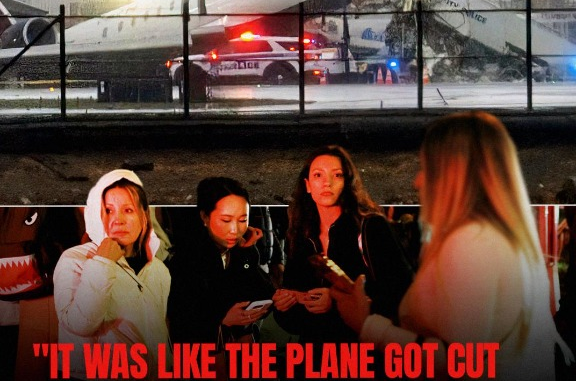
What began as a routine landing at New York’s LaGuardia Airport quickly turned into a moment witnesses describe as surreal. New details are emerging about the seconds leading up to the crash, revealing a chilling sequence of events. Investigators are still on site, and early findings could reshape our understanding of that night.
A tragic collision late Sunday night left two pilots dead and dozens injured after an Air Canada Express CRJ-900, operated by Jazz Aviation, struck a Port Authority fire truck while landing. The aircraft, arriving from Montreal with 72 passengers and four crew members, collided during what should have been a routine touchdown.
Emergency responders rushed to the scene, temporarily closing the airport. By Monday, investigators from the National Transportation Safety Board were combing the wreckage, with the Federal Aviation Administration and Canada’s Transportation Safety Board also joining the probe. The damaged plane remains on the runway, emphasizing the severity of the impact.
The crash also injured several ground personnel, including at least two firefighters. In total, 41 people were hurt—32 have since been released, while nine remain hospitalized with serious injuries. LaGuardia has partially reopened with a single runway in operation, but hundreds of flights were canceled, leaving travelers stranded.
Eyewitness accounts highlight the chaos. Leo Medina, 23, who was on another plane nearby, described the crash as though “the plane got cut in half.” Passengers faced hours of uncertainty, many sleeping on the airport floor as they waited.
Preliminary indications suggest miscommunication may have played a role. Aviation expert Anthony Brickhouse noted that both the aircraft and the fire truck appeared to have been cleared for their respective movements, highlighting potential errors in radio communications.
Dramatic air traffic control audio has surfaced, including a controller admitting, “Yeah, I tried to reach out to ‘em … And we were dealing with an emergency, and I messed up.” Online, listeners reacted to the raw emotion, expressing empathy for the controller’s overwhelming responsibility.
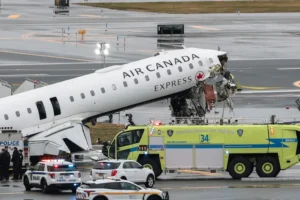
Passengers described terrifying moments inside the aircraft. Jack Cabot recounted the violent landing, saying, “Everybody was flying everywhere. The plane was veering left and right. It was chaos.” Witnesses noted that the pilots engaged reverse thrust at the last moment, likely reducing the severity of the crash and potentially saving lives. Many now view the crew’s final actions as heroic.
As investigations continue, survivors and officials alike are grappling with shock and gratitude. The collision serves as a stark reminder of how a few critical seconds can change everything—and how the courage and skill of those involved may prevent tragedy from becoming even worse.
Leave a Reply