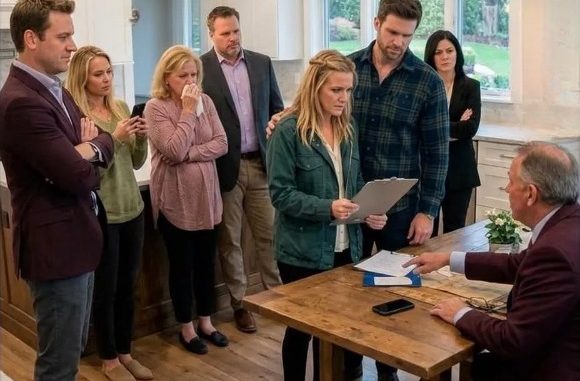
The day my parents laid a farm appraisal on my kitchen table and demanded that we sell our land, I realized every insult they had ever thrown at my marriage had finally caught up with them. My brother, Marcus, stood beside them in a tailored designer suit, his confidence shaken for the first time. His risky investments had fallen apart, taking my parents’ retirement savings down with them, and now they expected my husband, Ryan, and me to give up the home we had built. “You married a farmer,” Marcus scoffed. “Sell the property and finally do something that helps this family.” For years, he had belittled Ryan’s profession while my parents celebrated Marcus and his wife, Sophia, as successful financial experts. Even at my wedding, they treated my simple life on an Illinois farm as though I had settled for second best.
Ryan never wasted energy defending himself. Instead, he poured his time into improving the farm—studying soil conditions, modernizing irrigation, and managing complex operations from an office tucked inside our equipment barn. I had walked away from a high-pressure consulting career in Chicago because I wanted a life with purpose, but my family never respected that decision. All they noticed were muddy boots, local farmers’ markets, and community events. They never saw the innovation, research collaborations, or strategic planning that kept everything running. When Marcus and Sophia’s investments began unraveling, my parents suddenly became interested in the value of our land and hinted that selling it might solve everyone’s problems. My younger sister, Nora, quietly warned me they had already decided our farm was the answer to their financial crisis.
The following afternoon, they showed up carrying paperwork, acting as though the decision had already been made. My father insisted that family meant making sacrifices. My mother tearfully asked how I could let them lose their house. Sophia talked about damaged reputations, anxious clients, and an uncertain future, while Marcus dismissed our property as “just dirt” and claimed we could always start over somewhere smaller. I asked them where that concern had been when they mocked Ryan at our wedding and looked down on everything we had worked so hard to build. No one offered an apology. Instead, Marcus blamed his losses on the market and argued that selling our farm would buy the family enough time to recover. Ryan remained quiet until Marcus suggested he knew nothing about real business. Then Ryan smiled and invited our attorney into the room.
Our attorney calmly spread deeds, patent filings, corporate records, and licensing agreements across the table. The farmland itself was protected under the Stone Family Trust, while the research plots and technology facilities belonged to StoneAcre Systems. As Ryan’s business partner and shareholder, I shared ownership in the company—but I had no legal authority to sell the property my family had already valued behind our backs. Marcus and Sophia’s expressions changed instantly when they recognized the company’s name. StoneAcre was the agricultural technology firm they had mocked for years—and the very company they had wagered against without understanding its patents, government partnerships, or commercial contracts. Ryan wasn’t merely the “farmer” they had ridiculed. He was the founder of StoneAcre, and our farm was its most valuable research headquarters. The financial disaster that had ruined Marcus had come from betting against the same land he now expected us to sacrifice. I looked him in the eye and asked, “After everything you’ve said and done, why do you believe I still owe you anything?”
Leave a Reply