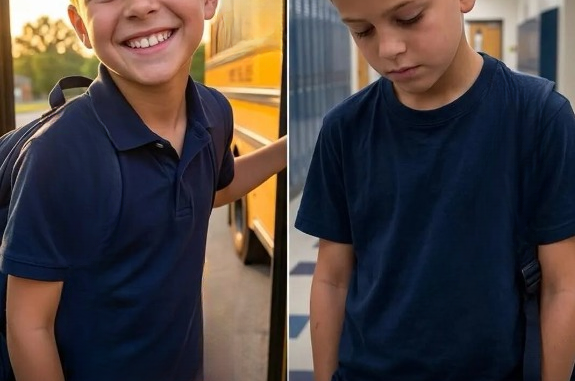
For nearly four months, Melissa watched her nine-year-old son, Micah, withdraw more and more while the adults around him dismissed his struggles as nothing more than “kids having disagreements.” Everything changed one morning when Micah quietly asked if he could eat lunch near the nurse’s office because he no longer felt safe in the cafeteria. Melissa soon discovered that another student, Cooper, had been taking Micah’s belongings, forcing him out of his seat, and making every school day stressful. She reported each incident, but the school insisted there wasn’t enough evidence for disciplinary action. Unwilling to accept another empty assurance, Melissa requested assigned seating, regular counselor check-ins, supervised dismissal, and written records of every complaint, while carefully documenting every conversation herself.
Outside the school, Cooper’s mother, Brianne, brushed off the concerns, insisting Micah simply needed to toughen up. Then she let one revealing comment slip, saying that every year another parent accused Cooper of causing trouble. That prompted Melissa to contact other families, and several shared nearly identical experiences involving stolen belongings, ruined lunches, and children who had begun avoiding school activities altogether. Melissa gathered their accounts and presented them during a volunteer meeting, where Brianne proudly described Cooper as a born leader. Melissa calmly laid the statements on the table and asked whether true leadership should make other children feel afraid. Although the principal remained cautious, the school finally agreed to separate the boys and increase supervision. It helped protect Micah, but Melissa still wondered why Brianne had concealed such a long-standing pattern.
The following day, Melissa met Brianne’s husband, Ross, at a local café and handed him copies of every complaint. Brianne had told the school he was unavailable, yet Ross had never heard about the meetings or the concerns raised by other parents. Melissa asked him to quietly observe after school before speaking with his wife. From a short distance away, Ross overheard Brianne admit that complaints about Cooper had surfaced before and that his behavior had also become difficult at home. She confessed she had stayed silent because she felt overwhelmed and feared being judged by others. When Ross stepped out, Brianne realized she could no longer deny the truth. The principal soon joined them, and Cooper quietly admitted that Micah’s missing lunchbox had been hidden in his bedroom because watching Micah search for it made him feel noticed.
Melissa didn’t push for a quick apology or punishment. Instead, she asked the school to properly document every future incident, have missing items returned through staff members, provide closer supervision, and offer support to both boys. Over the following weeks, Micah gradually regained his confidence and stopped looking over his shoulder as he walked into school. One afternoon, he came home carrying the lunchbox that had disappeared months earlier. Cooper had returned it through the school counselor and finally admitted why he’d been acting that way. He said making other children upset made him feel important, and he believed getting into trouble might finally convince his busy father to pay attention to him. Micah gently told him that hurting others would never be the right way to ask for love or attention. As he ran off to join his friends, Melissa realized that by refusing to stay silent, she had not only protected her own son but also helped everyone recognize that another child had been crying out for help in the only way he knew.
Leave a Reply