After eleven years of putting everyone else first, Megan Holloway finally woke up to something she had almost forgotten existed—true peace.
There was no rattling furnace beneath her aunt’s house, no relatives banging on the bathroom door, and no nonstop phone calls asking for money disguised as emergencies. Instead, there were towering pine trees, crisp mountain air, and the gentle sound of a stream behind the small cabin she had purchased in Briar Ridge, Colorado. Every dollar had come from savings she had protected for years.
The cabin wasn’t luxurious, but it was hers. It had two bedrooms, a cozy stone fireplace, a wraparound porch, and a black iron gate guarding the private gravel driveway. Most importantly, the deed listed only one name.
Megan Holloway.
On her second evening, she relaxed on the porch with a mug of coffee when her phone buzzed.
It was her cousin Darren.
“We’re bringing the whole family this weekend. Aunt Ruth says you owe us a place to stay.”
A second message followed.
“Don’t make this difficult. We’ll need both bedrooms, and the kids can sleep wherever. After everything Aunt Ruth did for you, this cabin belongs to the family too.”
Megan stared at the messages without replying.
For years, “family” had meant paying everyone else’s bills. She had covered Ruth’s property taxes, Darren’s truck payments, Melissa’s daycare costs, and Uncle Frank’s medical expenses while she herself slept behind a curtain in an unfinished basement.
Instead of arguing, Megan walked inside and reviewed the paperwork she had prepared before moving in. She had hired a security company, signed a private-road agreement, installed surveillance cameras, and mailed certified notices informing every relative that no one had permission to enter, stay, park, or store belongings on her property.
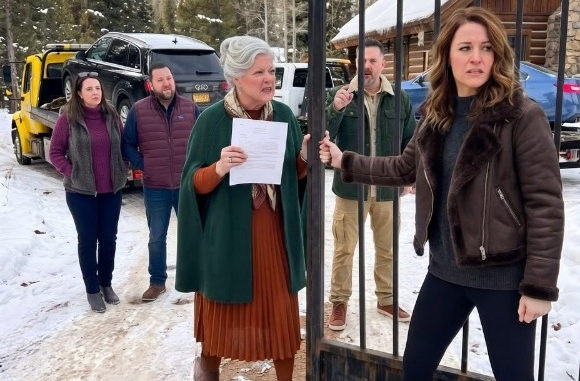
The next morning, several cars and a rented van pulled up outside the locked gate.
Darren shouted into the intercom while Melissa filmed herself crying. Aunt Ruth angrily jabbed at the keypad, only to discover her old access code no longer worked.
Minutes later, two tow trucks arrived.
Then a sheriff’s deputy handed Ruth an official notice ordering the family to leave the private road immediately or face trespassing charges.
Watching from her porch with a fresh cup of coffee, Megan felt surprisingly calm.
Darren yelled for her to open the gate, but she stayed where she was.
Deputy Carl Whitman reminded Ruth that she had already received written notice that the property was private.
“This is a family matter,” Ruth insisted.
“No,” the deputy replied. “It’s a property matter.”
Ruth claimed Megan had lived under her roof for years.
“I rented your basement,” Megan answered evenly. “And I paid more than your mortgage.”
Darren accused her of calling the police.
“I warned the sheriff last week that this might happen,” Megan replied. “Today they’re simply responding to trespassers.”
When Ruth complained about everything she had sacrificed, Megan finally listed the truth. Ruth had charged her rent as a teenager, pressured her into spending her inheritance fixing Ruth’s house, demanded she pay Darren’s bills, and constantly called her selfish whenever she refused another request.
Darren denied it.
“It happened exactly that way,” Megan said.
As the tow trucks began hauling away the vehicles, panic spread through the family. Deputy Whitman explained they had ignored repeated instructions to move their cars.
Ruth glared at Megan.
“You’ll regret humiliating me.”
Megan rested a hand against the cold iron gate.
“No,” she said quietly. “I regretted trusting you. This is something completely different.”
The vehicles disappeared down the mountain, leaving the road silent once again.
Back inside her cabin, Megan ignored dozens of missed calls and emotional voicemails accusing her of betraying the family. She deleted them without responding.
Later that day, her elderly neighbor, retired park ranger Owen Vale, stopped by with fresh bread, batteries, and peach preserves after hearing the commotion.
“Boundary problems only get worse if you ignore them,” he told her.
His kindness came with no conditions, something Megan wasn’t used to.
That evening, Ruth emailed a so-called “family-use agreement,” demanding permanent access to the cabin, holiday reservations, storage space, and free accommodations—all while Megan continued paying every expense.
Instead of arguing, Megan simply forwarded the email to her attorney, Naomi Price.
Naomi’s reply arrived minutes later.
“Don’t answer. I’ll handle it.”
A few nights later, Darren returned alone and tried entering the gate code after dark.
When Megan spoke through the intercom telling him to leave, he demanded reimbursement for the towing fees and insisted Aunt Ruth’s lawyer would prove the cabin belonged to the family.
“It was bought with my salary,” Megan answered calmly. “Not yours.”
When Darren angrily struck the gate, Megan immediately called Deputy Whitman. Before long, another sheriff’s cruiser arrived and escorted Darren away.
The next morning Naomi sent Ruth a formal cease-and-desist letter warning that any further harassment or attempts to access the property would result in legal action.
Rather than backing down, Ruth and Melissa took the dispute online, portraying Megan as a selfish woman who refused to help her own family.
Instead of trading insults, Megan posted a short statement explaining the facts. She included proof that she alone had paid for the cabin, screenshots showing Darren announcing they were coming without permission, and part of Ruth’s written demand for permanent access.
The reaction quickly shifted. Melissa deleted her post, Darren stopped responding, and even Uncle Frank eventually admitted Ruth had lied for years about helping Megan.
Months passed. Ruth made one final legal attempt to claim part of the property, but her lawyer quickly withdrew after discovering every financial record proved Megan had been supporting Ruth—not the other way around.
Although she could have sued to recover years of unpaid money, Megan chose something she valued even more.
Peace.
Spring eventually arrived, and Megan invited only the people who had truly respected her boundaries—her friend Tasha, her attorney Naomi, and Owen.
As they shared dinner on the porch overlooking the mountains, Owen glanced toward the locked gate.
“Buying land is one thing,” he said. “Protecting your boundaries is another.”
Megan smiled.
For years she believed love meant always saying yes.
Now she understood that real peace sometimes begins the moment you learn to close the gate.
Leave a Reply