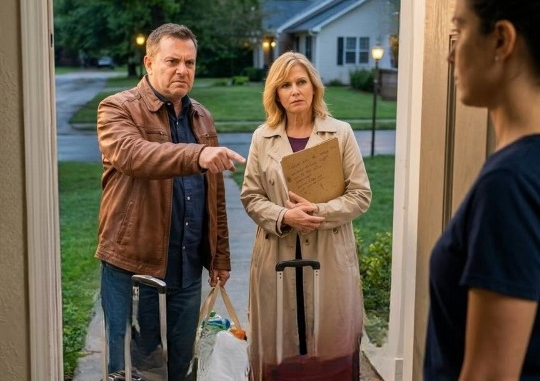
My parents showed up at my front door at exactly 7:12 on a rainy Thursday morning carrying two suitcases, several grocery bags, and the unmistakable confidence of people who believed they were about to move in. Watching through my doorbell camera, I saw my father, Richard, banging on the door while my mother, Linda, clutched a thick folder. “This house belongs to us now,” she declared. “You owe us for everything we did raising you.” The truth was very different. I had bought the house with my own money after years of working exhausting hospital shifts and rebuilding my life following a painful divorce. They had never helped with the mortgage, repairs, or any expenses connected to the home. Even so, my father reached for the doorknob while my mother insisted the papers she was holding proved they had every right to move in. I unlocked the inner door but kept the security chain latched. “Don’t take another step,” I told them. “The police are already on their way.”
Their visit wasn’t completely unexpected. A couple of weeks earlier, someone had tried to redirect their mail to my address. Not long after that, my bank alerted me to a suspicious application filed using my personal information, and my attorney uncovered a lease agreement bearing a signature that clearly wasn’t mine. I had already reported everything, secured my accounts, and prepared for the possibility that they might try something else. When two police officers arrived, my mother immediately claimed they were only there because they were worried about my well-being. One officer glanced at the luggage and calmly asked why concerned parents had packed enough belongings to move in. My father insisted it was a private family issue, but the officers asked to examine the folder. Just then, my attorney, David Klein, arrived and explained that the paperwork was tied to an ongoing investigation involving suspected identity fraud and an attempt to claim my property. Inside was a fake lease stating that my parents legally lived in my home.
My mother insisted I had signed the lease myself and simply forgotten about it, but David immediately produced my hospital work records and security badge logs showing I had been working a twelve-hour shift when the document was supposedly signed. The officers informed my parents they had no legal right to enter my property and warned that refusing to leave would result in trespassing charges. As they gathered their luggage and slowly walked back toward the sidewalk, my mother called out that I would one day regret abandoning my own family. For the first time, I didn’t apologize or try to fix the situation for them. In the weeks that followed, investigators confirmed the lease had been created using an online template and submitted as fraudulent proof of residency. They also discovered the financial application had been filed using my personal information without my knowledge. A no-trespass order was issued, my credit was locked down, and my attorney helped recover the expenses I had incurred protecting my home and identity.
Several months later, my parents were ordered to pay fines, placed on probation, and legally prohibited from coming near my property. When the judge gave me the opportunity to speak, I looked directly at them and finally said the words I had spent years trying to believe: raising a child is a parent’s responsibility, not a debt that can be collected later. They had no claim to my home, my identity, or the life I had built through my own hard work. A year later, I painted my front door a bright shade of blue, planted lavender along the walkway, and hosted Thanksgiving for friends who arrived carrying food, laughter, and love instead of demands. My parents came believing guilt would open my door. Instead, they discovered that the law—and one locked door—had already made the decision for me.
Leave a Reply