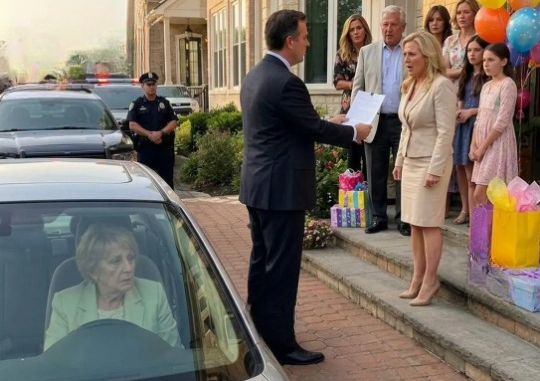
I was seventy-two years old when my grandson placed a glossy brochure for a retirement community in front of me at the kitchen table and suggested that I would be “better off” living somewhere else.
Wyatt spoke to me slowly and carefully, almost as if getting older had made me incapable of understanding simple things. The tea sitting between us became cold as he talked about organized meals, social events, and neighbors who were supposedly more appropriate for someone my age.
Then he got to the real reason for the conversation.
He wanted me to sell my house, my workshop, and the two acres of land surrounding it so the money could pay for my new living arrangement.
I had spent forty-six years in that home. I raised my son Daniel there. I watched my wife take her final breath in the bedroom we shared. But Wyatt looked around as if everything I had spent my life building already belonged to him.
For five decades, I had created handmade furniture in the workshop behind my house. The property was valued at nearly $640,000, completely paid off, with no mortgage, debts, or claims against it.
After Daniel died, I held onto Wyatt even more tightly because he was the last connection I had to my son. I helped him when he struggled, covering $4,800 in unpaid rent, buying him a $9,000 vehicle, and supporting several “business ideas” that never went anywhere.
Recently, his girlfriend, Sloane, had started asking questions about whether I had a power of attorney in place. Around the same time, Wyatt began telling neighbors that I was becoming forgetful, missing appointments, and had even left the stove on.
None of it was true.
I chose not to argue with him when he left.
Instead, I collected every important document related to my property and drove into town to meet with Harriet Okafor, the attorney who had helped settle Daniel’s estate.
The moment she heard what was happening, she recognized the warning signs.
Someone was trying to make people question my mental ability so they could gain legal control over my affairs and eventually sell my property.
Harriet arranged for me to complete a full cognitive evaluation, and the results confirmed what I already knew: I was completely capable of managing my own finances and making my own decisions.
She then helped place my home, land, and workshop into a protected trust with strict rules preventing anyone from selling or transferring them while I was still alive.
A few weeks later, Wyatt and Sloane arrived at my house with power-of-attorney documents they wanted me to sign.
Instead, I placed the official deed in front of them.
Harriet had already updated my estate plan, insurance paperwork, financial accounts, and legal protections. The documents clearly showed that I still had complete control over everything I owned, and the trust would prevent any unauthorized sale.
If Wyatt tried to challenge it, the medical evaluation, witness accounts, and the paperwork he brought with him would reveal exactly what he had attempted to do.
I looked him in the eyes and told him the truth:
The house was not for sale.
I planned to live there for the rest of my life.
Sloane’s expression changed immediately. Wyatt took longer to react. First came disbelief, then anger, and finally embarrassment.
He accused me of being selfish.
I reminded him that protecting my home did not mean I stopped loving my family.
A year later, Sloane left Wyatt after realizing there would be no easy inheritance waiting for her.
Wyatt stayed away for months.
Then, one Sunday, he called me—not asking for money, not asking for help.
Eventually, he showed up at the workshop door. He stood there quietly, looking like the same little boy who used to hand me tools while his father worked beside us.
I handed him a clamp.
He stayed for the afternoon.
Things between us are not the same as they once were, but we are slowly rebuilding what was damaged, one honest conversation at a time.
My property remains protected, and one day Wyatt will receive what I choose to leave him through a trust designed to preserve what I built—not reward irresponsible choices.
My door is still open.
But it is open for my grandson, not for someone waiting to take my home.
Leave a Reply