The first batches of bread were still warm on the cooling shelves when my son called from the lake, his voice filled with urgency.
“Mom, what happened to the business account?” Evan demanded.
In the background, I could hear Marissa asking what was going on.
His card had been declined at a gas station, and when he checked the banking app, he discovered his access had disappeared.
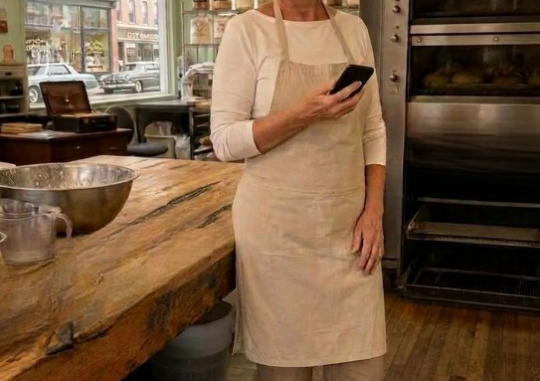
I placed another loaf on the rack and looked around the bakery my late husband, Raymond, and I had created together. The worn wooden table, the old copper mixing bowl, and the flour-dusted shelves had been part of our lives for thirty-six years. They had belonged to us long before anyone else believed they had a right to control them.
“You can’t access the account anymore because I removed you,” I said.
The silence on the phone told me everything.
For the first time, Evan realized I was no longer waiting for him to justify his choices.
Willa Jean’s Bakery began in 1987 with a used oven, $8,400 in savings, and a simple handwritten sign Raymond painted himself. After he passed away four years earlier, Evan started helping with the business. At first, I appreciated his support. He handled deposits, vendor payments, payroll systems, and online orders.
But slowly, helping turned into taking control.
I was sixty-eight years old and still waking before sunrise to bake the same recipes I had spent decades perfecting. Yet Marissa felt comfortable leaving me a detailed list explaining how I should prepare my own pastries before they left for their lake trip.
That morning, while Evan, Marissa, her mother, and the children packed up coolers and disappeared until Sunday, I noticed money missing from the petty cash box.
At first, I assumed it was a mistake.
Then my accountant discovered more than $800 in withdrawals that had no clear explanation.
A regular customer later mentioned that Evan had been telling people I was planning to retire and that he and Marissa were going to transform the storage area into a modern catering space.
That was when I searched through Raymond’s old desk.
Inside, I found a renovation proposal worth thousands of dollars, a zoning request filed weeks earlier, and a handwritten note from Marissa that stopped me cold:
“Need Mom’s signature on LLC transfer before bank meeting.”
I photographed every document and took everything to Adeline Strickler, the attorney Raymond had trusted with our legal affairs.
She confirmed that I was still the only owner of the bakery. But she also explained that Evan’s banking access gave him more power than I realized when I had signed paperwork he rushed beneath my hand during a busy day months earlier.
My accountant, Fern Atwood, uncovered two suspicious payments from the bakery’s savings account. One went to a design company. The other went to a planning service connected to the renovation project.
Evan had never bought the bakery.
He had never inherited it.
He had never been given ownership.
He had simply acted like he was in charge until everyone around him stopped challenging him.
Adeline contacted the bank, removed his access, preserved the financial records, and prepared legal protections for the bakery and the property behind it.
When Evan accused me of shutting him out without warning, I reminded him that he had already planned to replace my equipment, change my business, and seek financing without asking my permission.
A few days later, he returned from the lake with Marissa.
After closing time, they walked into the kitchen and found a folder waiting on the old worktable.
Inside were the zoning documents, renovation plans, transaction records, and Marissa’s handwritten note.
Evan finally admitted that he thought I was too old to continue running the bakery.
Marissa insisted their changes would improve profits and increase the property’s value.
I looked at them and told them something simple:
My age did not make my work less valuable.
And the life I built was not something they could claim because they thought they could manage it better.
Fern’s audit confirmed every unauthorized withdrawal. My attorney verified that the bakery, the land, the accounts, the insurance, and Raymond’s estate documents all remained legally mine.
I decided not to immediately press charges, but I required Evan to account for every dollar through legal channels. If he challenged the records or attempted to access the property again, the evidence would speak for itself.
Then I made one final decision.
I placed the back parcel of land into a trust and created the Raymond Holt Community Kitchen Fund.
The property would one day help local bakers who had talent but lacked the money or space to build their own businesses.
Evan’s name was nowhere on the documents.
The renovation deposit he and Marissa had spent became their responsibility—not mine.
Months later, the bakery welcomed three new people who needed a chance.
Amara, who created Caribbean desserts from her apartment.
Kelsey, a single mother building a hand-pie company.
And June, a college student selling homemade bread subscriptions.
The kitchen became busy again. Not with arguments or control, but with creativity and purpose.
Two months later, Evan came back alone.
He apologized without blaming anyone else.
He asked if he could work beside me again.
I looked at him and said, “Not yet.”
Because forgiveness was possible.
But trust had to be rebuilt.
One December morning, I found a pair of work gloves hanging near the back door—the same kind Raymond used to wear. I placed them on a shelf where I could see them every day.
Above his old desk, I hung a photograph from the week we opened the bakery.
On the back, in Raymond’s handwriting, were five words:
“First week. Still standing.”
The bakery was never created for someone to take away.
It was built for the people willing to care for it.
Leave a Reply