The Man Everyone Mocked
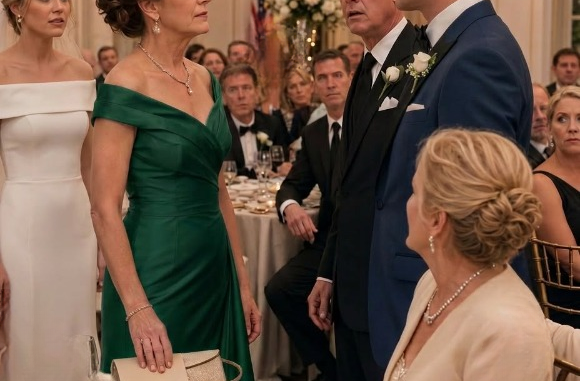
The ballroom filled with laughter when my new son-in-law introduced me as the old man everyone would have to tolerate.
He said it with a smile, one hand on my shoulder, while 150 guests watched beneath the gold chandeliers. The cruelest part wasn’t Wesley’s joke—it was that my daughter, Inez, stood beside him and said nothing.
“This is Floyd King,” Wesley announced. “My father-in-law. The old man we all have to put up with now.”
Everyone laughed.
His father added, “At least he paid for the wedding. That earns him a seat.”
I stayed calm. I had spent a lifetime handling pressure in boardrooms, and I knew the difference between a joke and disrespect.
I had paid for that wedding—thousands of dollars in deposits, flowers, music, lighting, and every detail Wesley’s family insisted mattered. They saw me as an ordinary older man they could use, not knowing who I really was.
Then Hartley Howard, Wesley’s father, looked closer at me.
“Wait… your name is Floyd King?”
“Yes.”
“Floyd King from Quantum Crisis Solutions?”
I nodded.
His expression changed instantly.
Starting Monday, Hartley would be reporting to me as part of my new role leading the company’s crisis management division.
The man who mocked me had no idea he would soon answer to me.
But the wedding humiliation was only the beginning.
Days earlier, I had discovered that Hartley’s family had financial problems hidden behind their expensive clothes and wealthy image. Wesley’s business had collapsed, he was buried in debt, and his family’s lifestyle was built on pretending.
What hurt most wasn’t them.
It was my daughter’s silence.
For years, I had supported Inez because I loved her. I paid for the wedding because I believed I was helping her build a future. I never imagined I was being treated like a resource instead of a father.
After the wedding, I began looking deeper.
The truth was painful.
Wesley had encouraged Inez to pressure me for money. He knew I could afford it and saw my generosity as something he could exploit.
When I finally confronted them, Wesley didn’t apologize. He simply said, “You had the money. Fathers are supposed to help.”
That sentence changed everything.
I told him the truth: having something does not mean people are entitled to take it.
Inez admitted she knew Wesley was struggling but convinced herself she could fix everything. She had chosen protecting him over being honest with me.
I asked them to leave.
Not forever.
But until they understood what they had done.
At work, I handled Hartley professionally. I documented his mistakes, evaluated his performance, and treated him exactly as I would any other employee. I refused to let personal anger become an excuse for unfairness.
Eventually, Hartley resigned.
Wesley entered counseling.
Inez moved out temporarily and began facing the reality of her choices.
Months later, she came to my house and admitted something I had been waiting to hear.
“I don’t know if I loved him,” she said. “Or if I loved being needed by him.”
For the first time in a long time, she was honest.
I forgave her slowly—not by pretending the pain never happened, but by allowing trust to be rebuilt.
The apology to the wedding guests eventually came. Everyone learned the truth: I had paid for the celebration, and the jokes made at my expense were wrong.
It didn’t erase the humiliation.
It didn’t bring back the money.
But it put the truth where it belonged.
For most of my life, I believed silence was dignity.
Sometimes it is.
But sometimes silence only teaches people that they can keep hurting you.
I lost a job. I lost the image of the perfect family I thought I had. I learned painful truths about the people closest to me.
But I kept my self-respect.
And at sixty-eight years old, I finally understood that a happy ending is not always about getting everything back.
Sometimes it is simply knowing you no longer have to stay silent.
Leave a Reply